B2B Newsletter Case Study: What 12 Months of Consistent Publishing Actually Builds
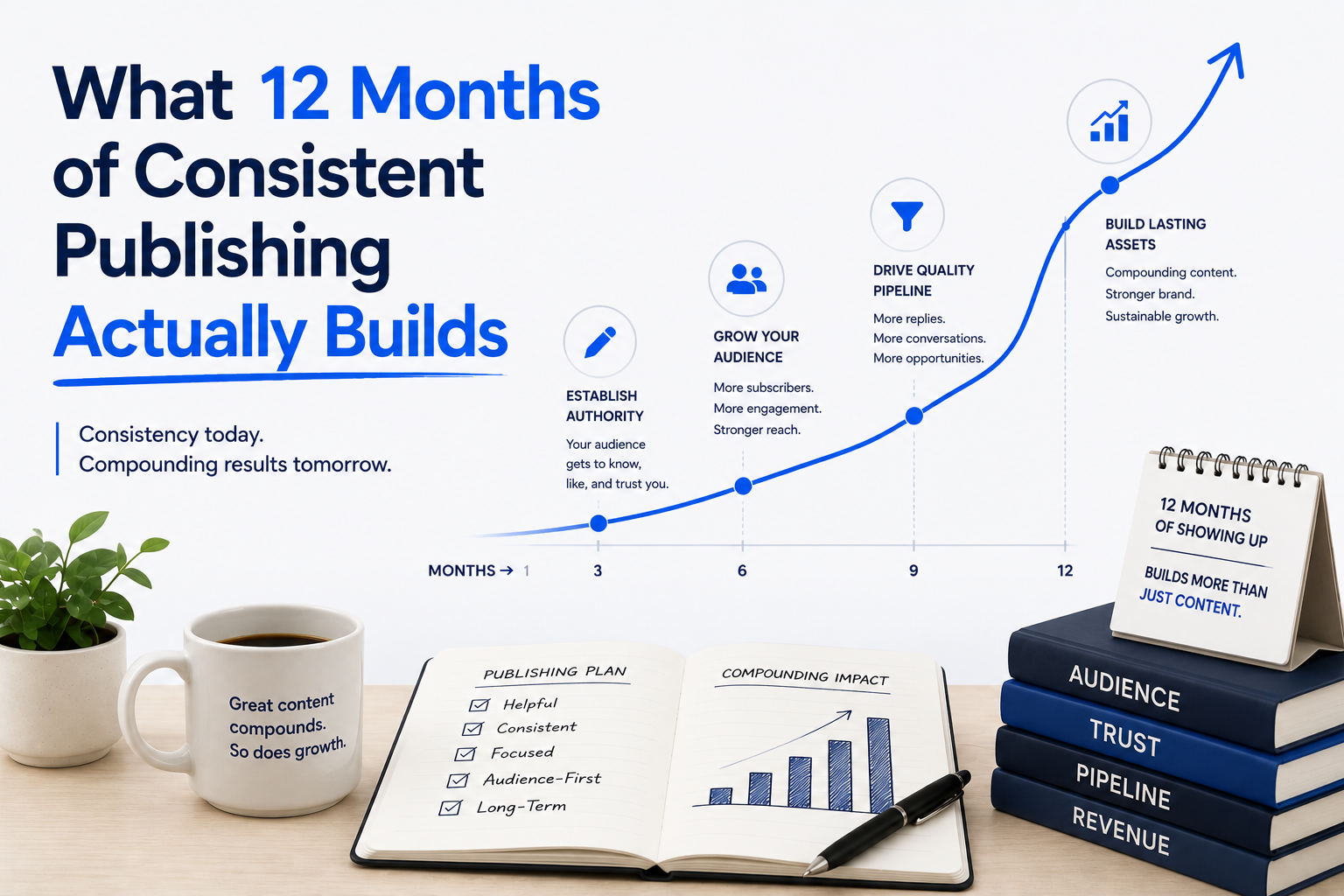

Here's a composite of what we see across our B2B client work over a 12-month engagement. The realistic arc from a standing start to a newsletter that's contributing meaningfully to pipeline. The numbers are representative, not from a single client, because the patterns repeat enough that describing one describes most.
If you're trying to decide whether a newsletter is worth the investment, this is the picture we'd give you.
The Starting Point
A typical client comes to us with one of two situations.
The first: they've tried a newsletter before, got to 8–12 issues, struggled with subscriber growth, and quietly stopped. The content was fine. They just never built enough of an audience to see any results.
The second: they've never tried a newsletter, they know they should, and they keep deprioritising it because there's always something more urgent.
In both cases, month one starts from near zero. Some existing contacts get an invitation to subscribe. A LinkedIn announcement goes out. Maybe a few dozen people join in the first week.
That first month, subscriber count is usually between 40 and 150. Depending on the size of the founder's network and how actively they promoted it.
Months 1–3: The Hard Part
We won't sugarcoat this. The first three months are the hardest part of building a B2B newsletter, and they're where most in-house attempts fail.
Growth is slow. The existing network is tapped out by week three. LinkedIn posts about the newsletter get good engagement from existing followers but most of those followers aren't your ICP.
By the end of month three, a well-executed newsletter is typically sitting somewhere between 200 and 400 subscribers. That's not an impressive number. It doesn't feel like it's working. The temptation to scale back or stop is real.
What's happening under the surface, though, is that your earliest subscribers are building a relationship with your content. Open rates at this stage are typically 45–55% higher than they'll ever be again because early subscribers are the most engaged. They're the ones who chose to subscribe when there was barely anything to show them.
Months 4–6: First Real Signals
Around month four, things start shifting.
The first substantive reply conversations happen. Not feedback actual "this is relevant to something I'm dealing with" messages from subscribers who are clearly in your ICP.
Cross-promotion partnerships start producing results. A swap with a complementary newsletter sends 80 new subscribers in a single week. Subscriber count crosses 500.
By month six, most clients are sitting between 600 and 900 subscribers. The list has been generating a handful of qualified leads per month for the past 8 weeks. The sales team has started noticing that some of the warmest inbound conversations are coming from newsletter subscribers they've never cold-reached.
Months 7–12: The Compounding Effect
The second half of the year is where the investment starts to look obviously correct.
By month nine, list size is typically 1,000–1,500. Reply rate has stabilised at 3–6 replies per send. Two to four of those replies per month are converting into qualified discovery calls. Close rate on those calls is running 25–35% meaningfully higher than leads from paid channels or outbound.
The sales team has started asking the marketing team to flag which incoming leads are newsletter subscribers. Because they've noticed the calls go differently. Subscribers ask sharper questions. They reference specific issues. They come in with a level of trust that makes the early part of the sales conversation feel different.
By month twelve, the newsletter is contributing 3–6 new customers per month in attributable pipeline. Not all leads are customers. At an average deal size of $15,000–$30,000, that's a real revenue contribution from a channel that costs a fraction of what paid acquisition would cost for equivalent output.
What Made It Work
Looking across the clients who've seen results like this, a few things are consistently true.
They didn't optimise for subscriber count: Every subscriber acquisition decision was filtered through a simple question: is this person our ICP? A list of 1,000 qualified subscribers outperforms a list of 5,000 general readers every time.
They took positions: The newsletters that generate pipeline aren't neutral. They have a point of view. They tell readers what to think about industry trends, not just what the trends are. The response in the form of replies, forwards, and conversations is proportional to how clear that perspective is.
They showed up consistently: Every client on this trajectory sent their newsletter on the same day, at the same time, every week. Without exception. The compound trust that builds from consistency is invisible until it isn't -- and then it drives everything.
They had a 12-month commitment: None of the results described above were visible at month three. The clients who saw them were the ones who committed to a minimum 12-month run before evaluating the channel. That's the only way to let the compounding do its work.
What This Looks Like for Your Business
The specific numbers will vary. Your ICP, your industry, your average deal size, your existing network all of it affects the shape of the curve.
But the pattern holds. A B2B newsletter built for a specific audience, with a genuine point of view, sent consistently over 12 months generates pipeline that paid acquisition can't replicate and an owned asset that keeps paying dividends long after the work is done.
The question isn't whether it works. It's whether you're willing to build for 12 months before you judge the results.
Your newsletter won't build itself.

How SaaS Companies Use Newsletters to Reduce Churn and Drive Expansion Revenue

How Professional Services Firms Use Newsletters to Win Clients

B2B Newsletter Examples: 10 Companies Doing It Right (And What You Can Learn From Each)