Newsletter vs Paid Ads: The Cost Per Lead Comparison B2B Companies Need to See
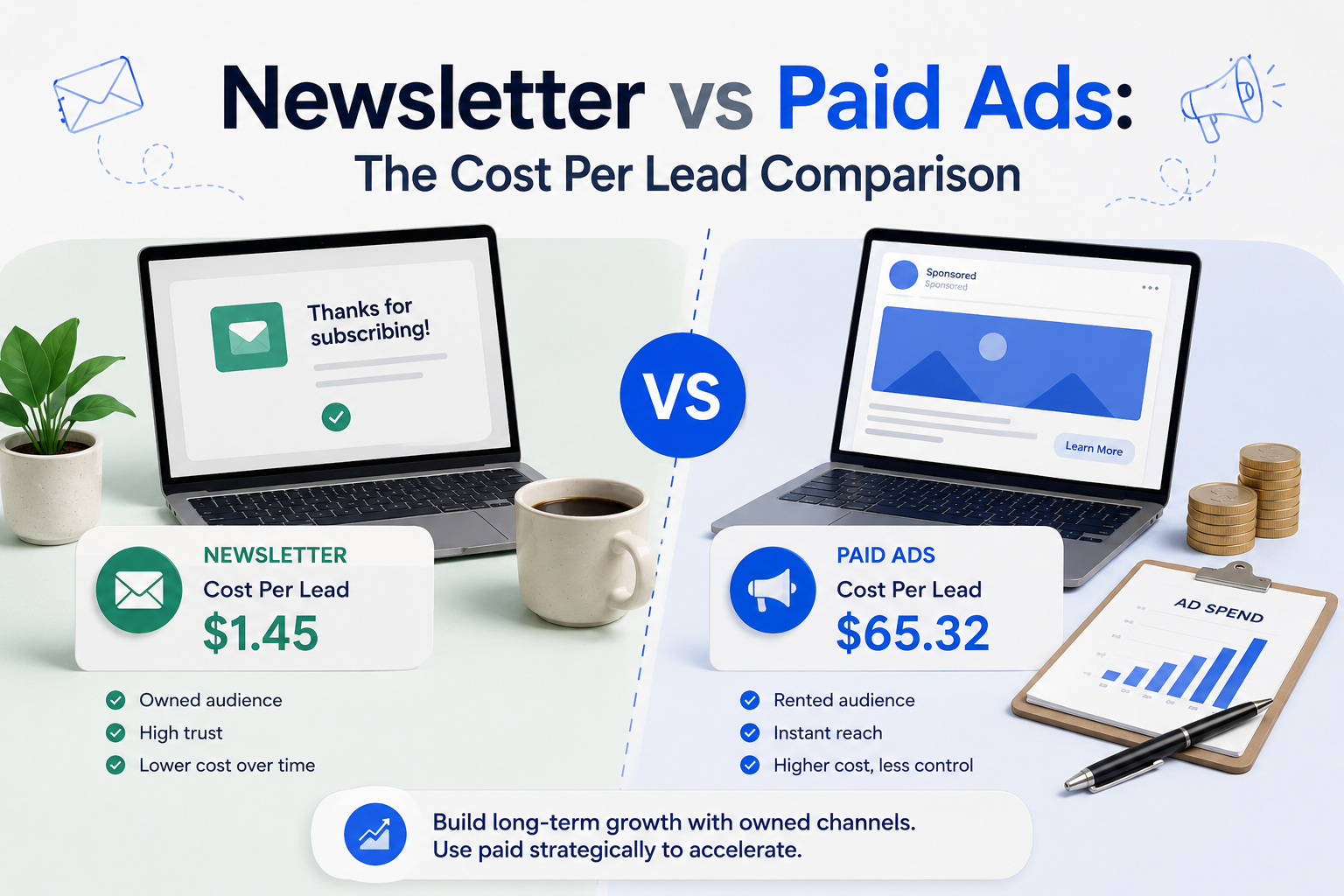

Here's a number that tends to get people's attention: the average cost per lead from LinkedIn ads for B2B companies is somewhere between $75 and $200, depending on your industry and how competitive your targeting is.
Here's another one: a well-run B2B newsletter, once it reaches scale, can generate qualified leads at a fraction of that cost.
That's not a knock on paid ads. They have a role. But most B2B companies treat paid advertising as the default demand generation channel without ever running the numbers on what the alternatives actually cost.
The Problem With Paid Ad Economics
Paid advertising works on a simple model: you spend money, you get leads. Stop spending, stop getting leads. The entire value of the channel disappears the moment you stop the campaign.
For early-stage companies with no audience and no organic presence, paid ads are often the right move. You need leads now, and paying for them is faster than building something from scratch.
The problem is that the economics get worse over time, not better. As more companies compete for the same audiences on LinkedIn and Google, CPCs go up. Conversion rates stay flat or decline as audiences become more ad-blind. You're on a treadmill spending more for the same results, quarter after quarter.
There's also the ownership problem. Your paid ad audience isn't yours. Turn off the campaign and you have no relationship with any of those people. You've rented attention, not built it.
How Newsletter Economics Work
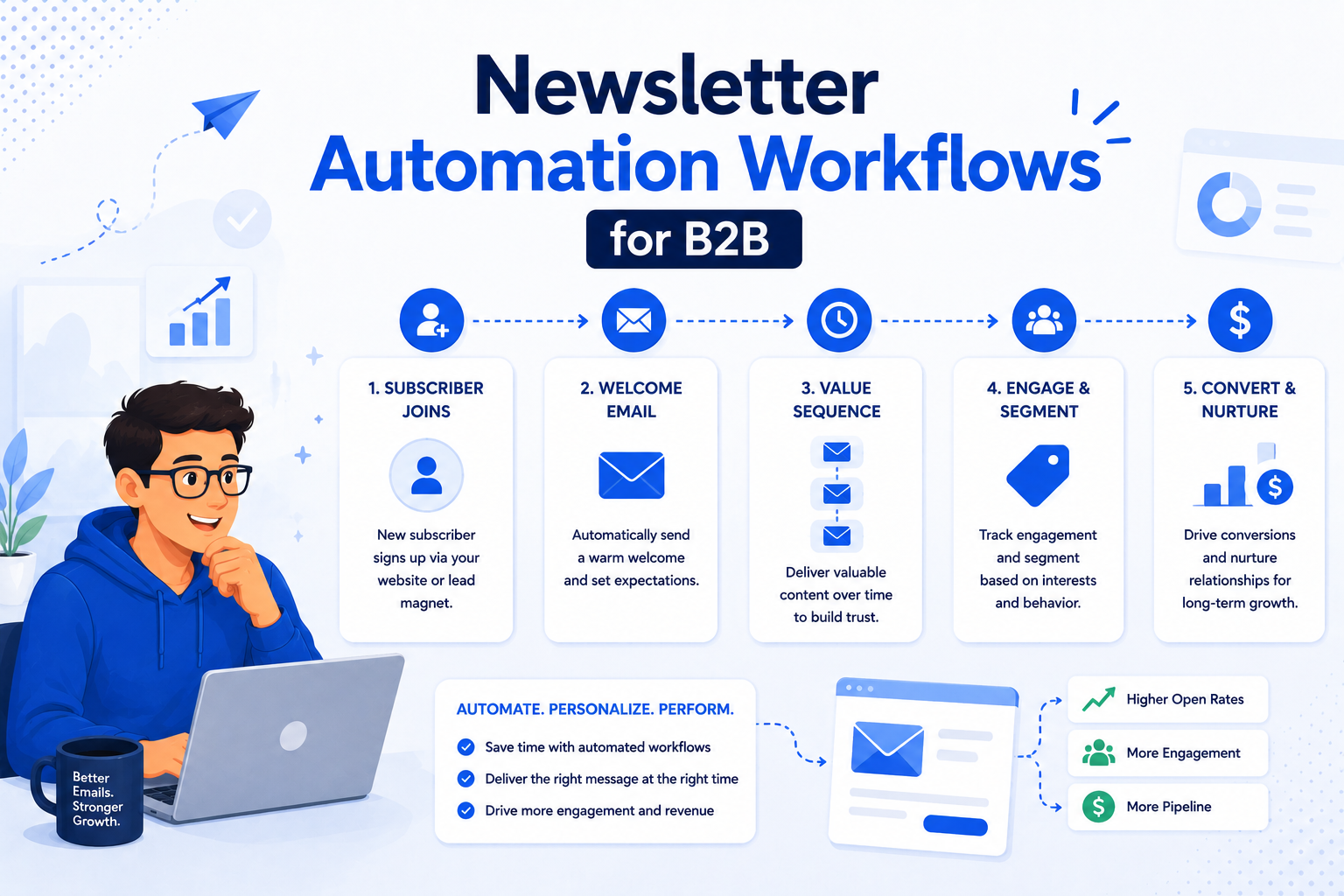
A newsletter works differently. The investment is front-loaded: content creation, platform setup, subscriber acquisition and the returns compound over time.
Here's what the cost structure actually looks like for a B2B company building a newsletter from scratch:
- Platform cost: $0–$100/month (Beehiiv, ConvertKit, others)
- Content creation: $1,500–$4,000/month if outsourced; primarily time if done in-house
- Subscriber acquisition: variable, but organic tactics cost primarily time
In the early months, cost per subscriber is high because you're building on a small base. By month six to twelve, as organic channels start compounding, your subscriber acquisition cost drops significantly.
Here's what matters: subscribers are an owned asset. You can reach them next month without paying anything additional. The value of the list grows with every issue you send.
Running the Actual Comparison
Let's use a concrete example. A B2B company with an average deal size of $25,000 and a sales cycle of 90 days.
Paid ads scenario: You spend $5,000/month on LinkedIn ads. At $150 CPL, that's approximately 33 leads per month. If you close 10% of those, you're generating 3–4 new customers per month. Cost per customer acquired: ~$1,500 in ad spend alone, before sales team time.
Newsletter scenario: You invest $3,000/month in newsletter content and modest subscriber acquisition. After six months, you have a list of 800 qualified subscribers your ICP. Those subscribers are generating 5–8 reply conversations per month, of which 2–3 turn into qualified calls. Close rate on newsletter-sourced leads tends to be higher (25–30%) because of the trust already established.
The newsletter doesn't win in month one. It probably doesn't win in month three. But by month nine, the math has flipped and unlike paid ads, the list keeps paying dividends whether or not you continue to invest in growth.
The Comparison That Matters Most: Lifetime Value
The real newsletter advantage isn't cost per lead. It's what happens to a lead before they ever raise their hand.
A prospect who's been reading your newsletter for six months isn't the same as a prospect who clicked an ad five minutes ago. They know your thinking. They've seen evidence of your expertise across 25 issues. They've already been sold they just haven't called yet.
In practice: newsletter-sourced leads close faster and at higher rates. In our client work, we consistently see newsletter subscribers converting at 20–30% higher rates than leads from paid channels. When you factor that into a true cost-per-acquisition calculation, the newsletter's advantage becomes even more significant.
Where Paid Ads Still Win
This isn't a case against paid advertising. It's a case for understanding what each channel actually does.
Paid ads win on speed. If you need leads in the next 30 days, paid acquisition will generate them faster than any organic channel. If you're entering a new market or targeting a new segment, paid ads let you test messaging and audience fit quickly without building an audience from scratch.
The smart play for most B2B companies isn't newsletter versus paid it's using paid ads to build your newsletter list faster, so the owned asset you're building grows more quickly. Run LinkedIn ads that drive newsletter sign-ups rather than direct sales calls. You pay for the subscriber once. The newsletter does the nurturing from there.
The Question to Ask Your Marketing Team
If your company has been running paid ads for more than 12 months, ask this: what's the value of the audience we've built?
In most cases, the answer is nothing. You've generated leads, some became customers, the rest are gone. The next dollar you spend starts from the same base as the first dollar you ever spent.
A newsletter answers that question differently. Every month, the list is more valuable than the month before. Every issue builds trust you don't have to pay to rebuild next quarter.
That's the comparison that matters. Not this month's CPL but what the channel is worth in two years.
Your newsletter won't build itself.

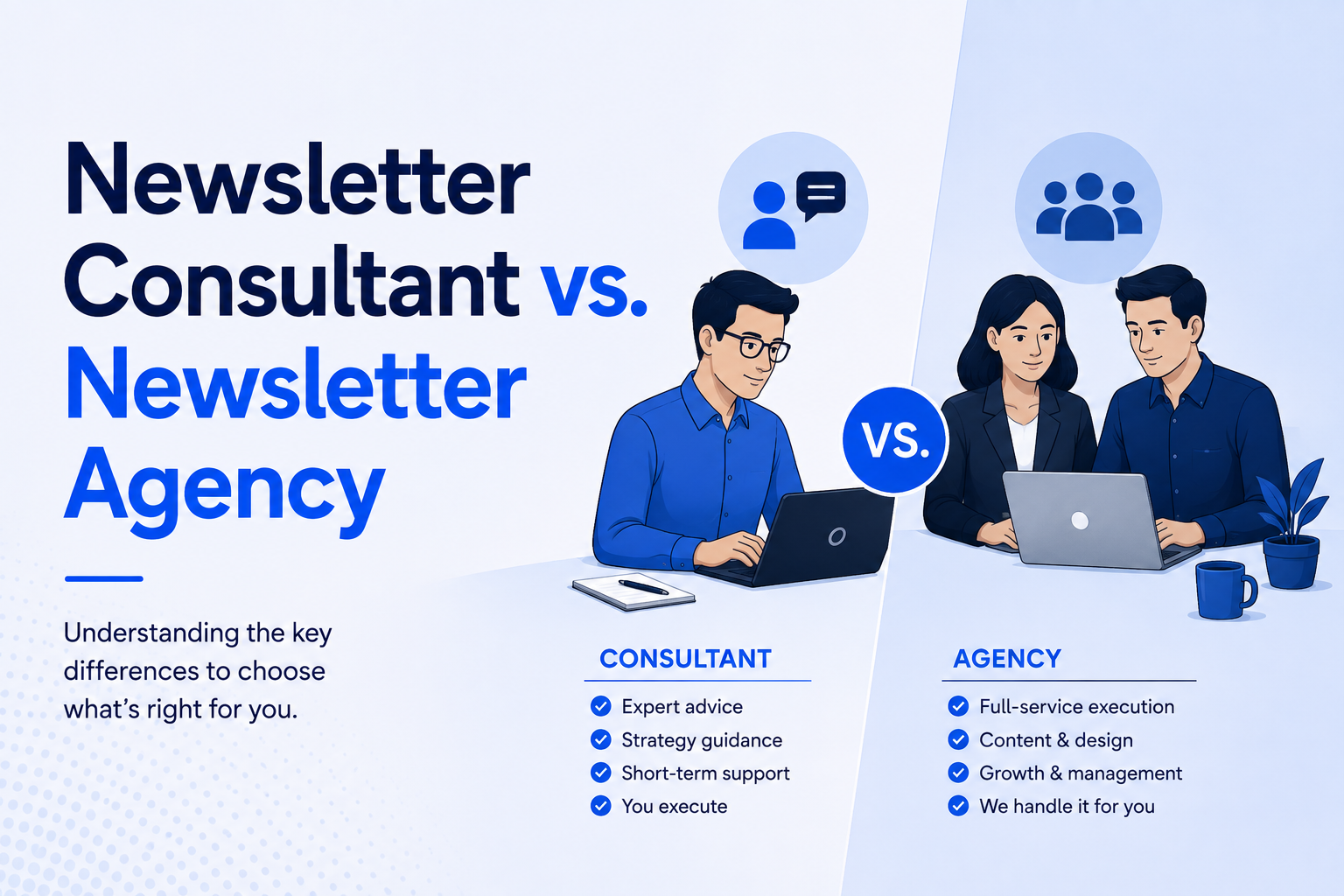
Newsletter Consultant vs. Newsletter Agency: Which One Actually Moves the Needle?
What Is a B2B Newsletter Agency (And What They Actually Do)
What Does a Good B2B Newsletter Actually Look Like?