How B2B Newsletters Generate Pipeline (With Real Numbers)

Every time we onboard a new client, they ask the same question: when will we start seeing leads?
It's the right question. But it has a different answer than most marketing channels, and misunderstanding that answer is why so many B2B newsletters get cancelled right before they start working.
The Mechanism Most People Miss
Newsletters don't generate leads the way ads do. There's no funnel, no click-through, no form submission. The mechanism is different and it's more powerful, once you understand it.
Here's what actually happens.
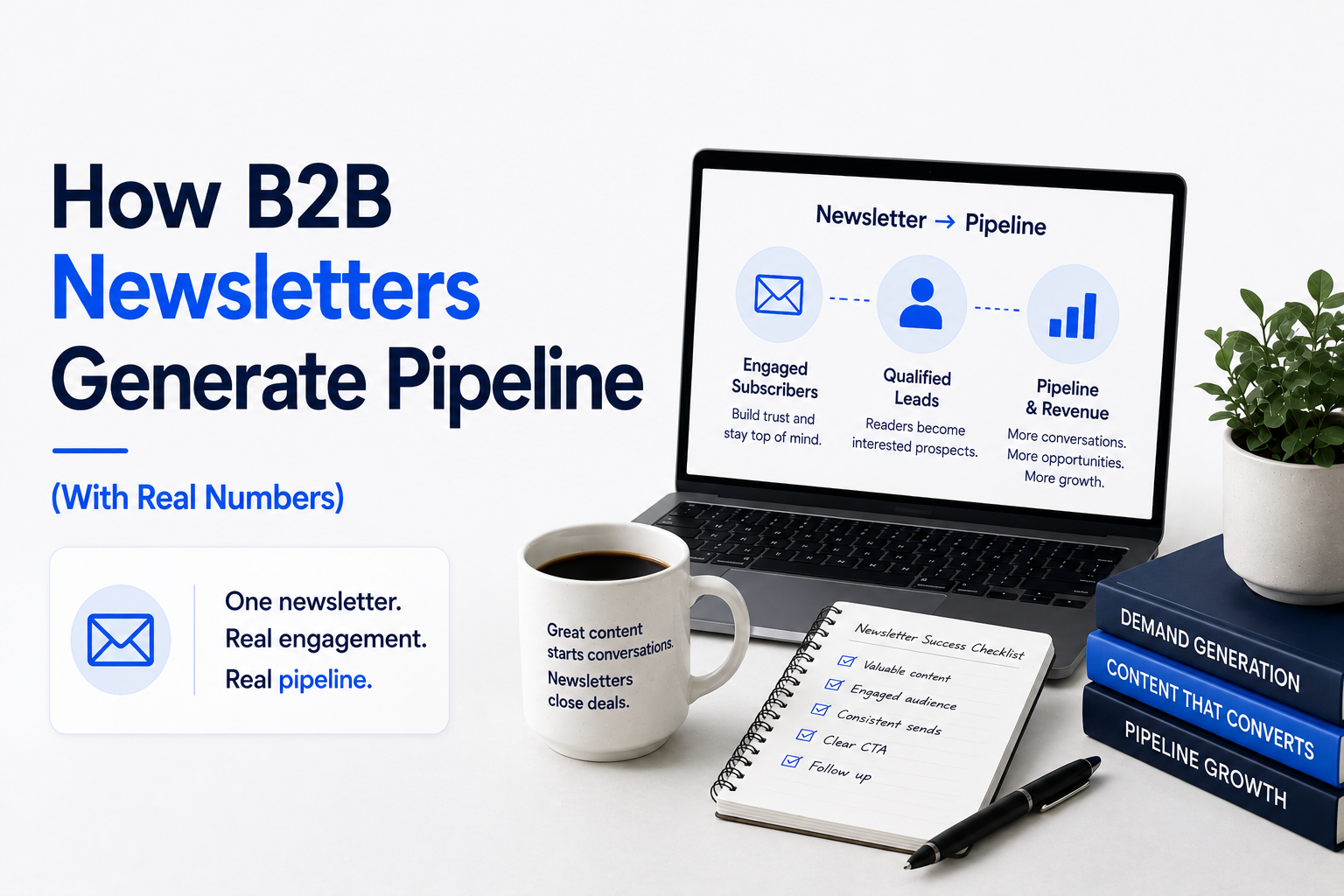
Someone in your ICP - let's say a VP of Operations at a mid-market manufacturing company sees your newsletter mentioned on LinkedIn and subscribes. They're not ready to buy. They're just curious.
Over the next three months, they read your newsletter every Tuesday. Not every issue. But most of them. They notice you know your stuff. They bookmark an issue about a problem they've been dealing with. They forward one to a colleague.
Then their contract with your competitor comes up for renewal. Or their boss starts asking about the problem you've been writing about. Or something internal shifts and they're now ready to evaluate options.
They don't Google "[your service] providers." They email you. Because they've been reading you for three months and they already trust your thinking.
That's pipeline from a newsletter. Not a form fill. A warm inbound reach-out from someone who's already half-sold before the first call.
What the Numbers Actually Look Like
Let's talk specifics. These are the ranges we see across our B2B client work, not projections.
Reply rate: A well-written B2B newsletter to a qualified list generates 3–8 replies per send. Some issues generate more, some fewer it correlates with how directly the content connects to a problem the subscriber is actively facing.
Reply-to-call conversion: Not every reply becomes a sales conversation, but a good number do. In our experience, 20–40% of substantive replies turn into booked discovery calls, depending on how well-qualified the list is.
Newsletter lead close rate: This is the number that matters most. Newsletter-sourced leads close at higher rates than leads from cold outreach or paid advertising: typically 25–40% higher. The reason is straightforward: by the time they reach out, the trust-building work is already done.
Run those numbers against a 500-subscriber list and you can see the shape of the pipeline. A weekly send to 500 qualified subscribers generates 15–40 replies per month. Three to sixteen of those become discovery calls. If you close at 30%, that's one to five new customers per month from a list of 500 people.
That's a list of 500. Not 50,000.
The Stages of Newsletter Pipeline Generation
Stage 1: Months 1–3 (List building, low direct pipeline)
The first three months are about establishing the channel, building the list, and finding the voice. You'll start getting replies, but they're more likely to be feedback and conversation than sales opportunities.
Don't judge the newsletter on pipeline output in this period. You're planting. The harvest comes later.
Stage 2: Months 4–6 (First inbound signals)
By month four, the list has grown, early subscribers have been reading for long enough to trust you, and the first genuine sales conversations start appearing in your inbox without you prompting them.
This is where most companies who stuck with it have their first "newsletter moment" the realisation that someone just reached out because of something you wrote and they're a perfect fit. It's a different feeling than a lead that came from an ad.
Stage 3: Month 7+ (Compounding pipeline)
Once the flywheel is moving, the newsletter starts contributing systematically. Replies come regularly. The sales team starts recognising newsletter subscribers in the CRM as a qualitatively different kind of lead. Close rates on newsletter-sourced deals start visibly outpacing other channels.
This is also where the referral effect kicks in. Subscribers who've been reading for six months start forwarding issues to colleagues and peers in your ICP. Your list grows partly on the strength of your content, without additional acquisition spend.
How to Accelerate the Timeline
The stages above assume a typical build. There are things you can do to compress the timeline.
Lead magnet at sign-up: Give new subscribers a reason to subscribe that's immediately useful a template, a guide, a framework. This attracts higher-intent subscribers and starts the relationship on a stronger footing.
Direct call-to-action in early issues: Your first five issues should include a soft CTA something like "reply and let me know your biggest challenge with X." Prompting replies early establishes the behaviour and surfaces sales conversations faster.
Subscriber quality over quantity: A list of 300 qualified subscribers generates more pipeline than a list of 1,000 unqualified ones. Focus growth tactics on channels that attract your ICP - LinkedIn content, targeted partnerships, relevant communities.
The Realistic Expectation
A B2B newsletter is not a lead generation tap you turn on and off. It's a compounding asset that gets more valuable with every issue you send.
The companies that build serious pipeline from their newsletters are the ones that committed to a 12-month runway, kept showing up even when month three looked disappointing, and built a list of people who actually matched their ideal customer profile.
The ones who stopped at month four, right before the compounding started, never found out what was waiting on the other side.
Spacebar Studios helps B2B companies build newsletters that generate pipeline, not just opens.
Your newsletter won't build itself.

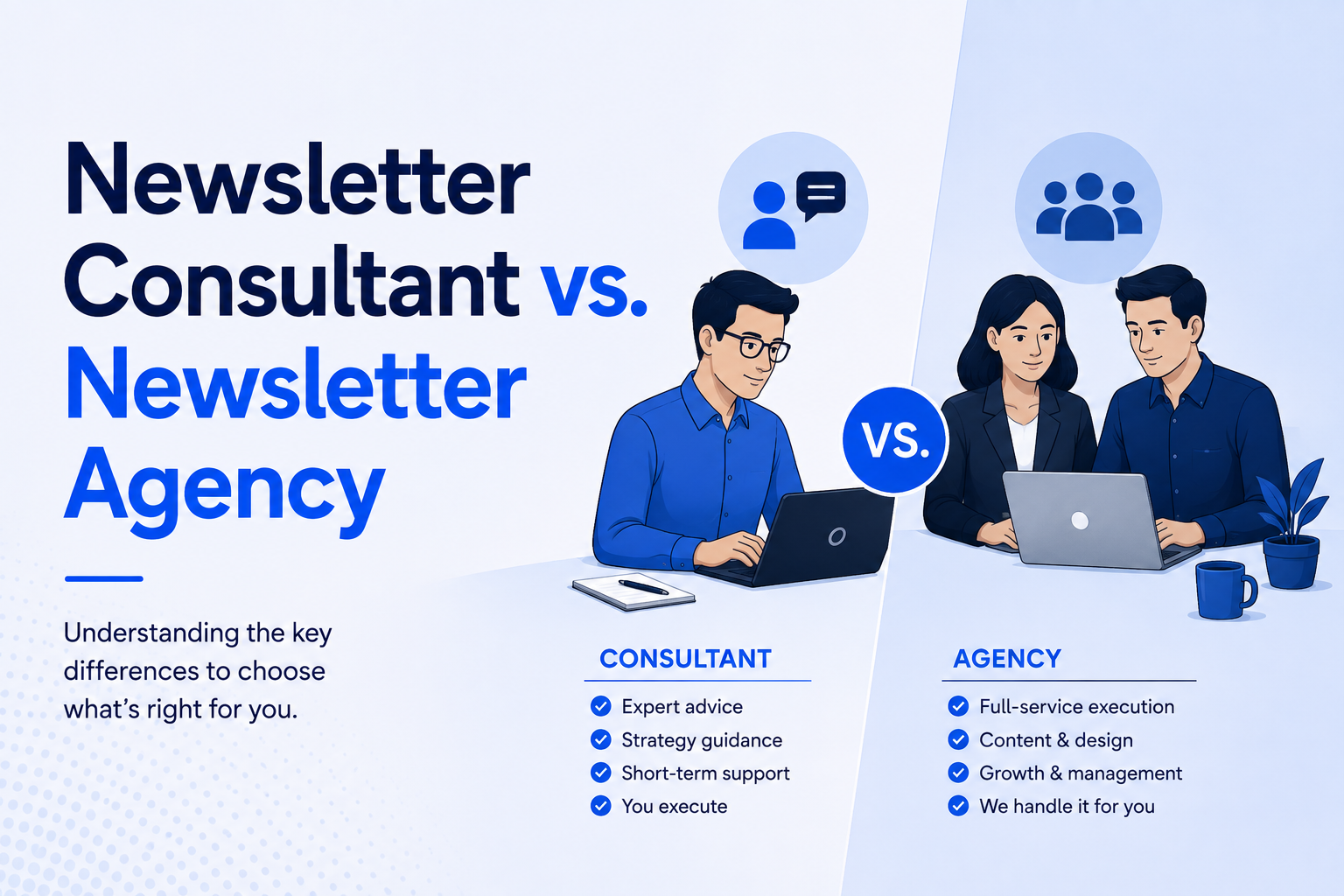
Newsletter Consultant vs. Newsletter Agency: Which One Actually Moves the Needle?
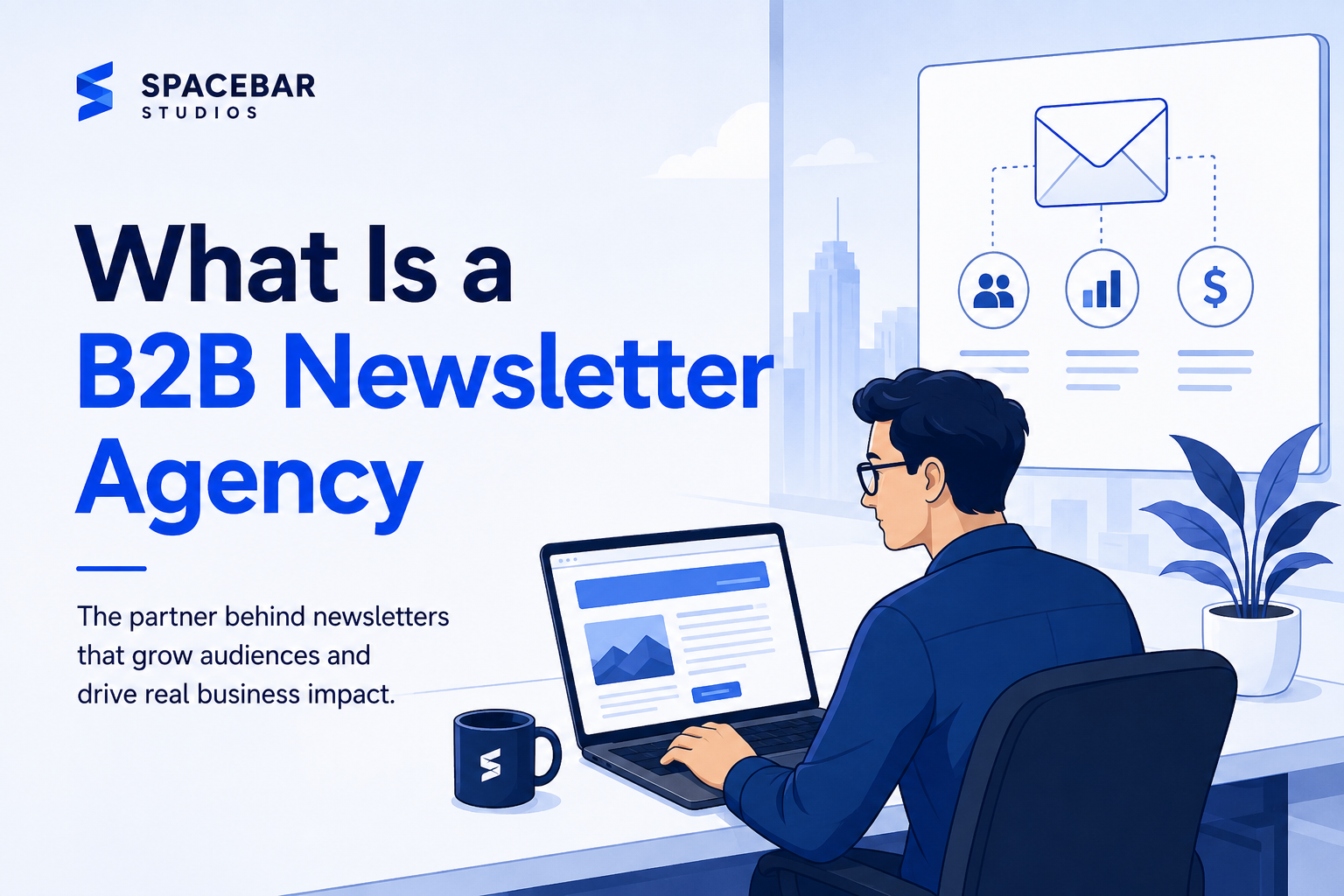
What Is a B2B Newsletter Agency (And What They Actually Do)
What Does a Good B2B Newsletter Actually Look Like?