What Is a B2B Newsletter Agency (And What They Actually Do)


A B2B newsletter agency runs a company's newsletter end to end: strategy, writing, growth, and deliverability, so an internal team doesn't have to build that function from scratch.
That's the short answer. Most companies searching for one don't actually know what's included, which is why so many end up disappointed six months in.
What "Agency" Actually Means Here
The word gets used loosely. Some newsletter agencies are really content writers who happen to format things as a newsletter. Others are full-service marketing shops that added newsletters to a long list of things they also do: SEO, paid social, website design.
A dedicated B2B newsletter agency does one thing. Newsletters, for companies selling to other companies. That focus shows up in the details: how they think about ICP targeting, how they measure success, how they talk to a sales team about pipeline instead of just open rates.
What's Actually Included
Four things, usually.
1. Strategy. Positioning, topic pillars, cadence, and a plan for how the newsletter fits into the rest of the marketing and sales motion. Not just what to write about, why the newsletter exists and who it's for. A strategy that skips the "who's this actually for" question tends to produce content that reads fine but doesn't build toward anything.
2. Content. Writing, editing, and formatting every issue. Some agencies do this entirely in-house. Others work from a client's raw material, a call recording, a Slack thread, a founder's notes, and turn it into something publishable. The best version of this doesn't require the client to sit down and write anything themselves; it pulls material out of work they're already doing.
3. Audience development. Growing the list with the right people, not just more people. LinkedIn, lead magnets, cross-promotion, referral programs, whatever mix fits the audience.
4. Technical operations. Platform setup, domain authentication, deliverability monitoring, segmentation. The unglamorous work that decides whether issues land in the inbox or the spam folder.
A real agency covers all four. A lot of what gets marketed as a newsletter agency only covers content, and quietly leaves growth and technical setup for the client to figure out.
How a Typical Engagement Actually Runs
Most engagements start with a short onboarding phase, usually two to four weeks: interviews with the team, a review of existing content and customer data, and a first draft of the positioning and topic pillars before anything goes out to a real subscriber.
After that, it settles into a recurring cadence. A weekly or biweekly rhythm for the newsletter itself, plus a regular check-in where growth numbers and strategy get reviewed together, not just reported on.
That ongoing review matters more than people expect going in. A newsletter that launches well and then runs on autopilot for a year usually plateaus. The agencies that keep producing results treat month six the same way they treated month one: watching the numbers, adjusting the topics, testing the growth channels that aren't working instead of the ones that are comfortable.
What a B2B Newsletter Agency Is Not
It's not a content mill that outputs generic articles on a schedule. It's not a freelancer working from a brief with no strategic input. And it's a different job from an email marketing agency that runs product updates and promotional blasts, with different goals and different metrics.
The distinction matters because the pricing and the results look completely different depending on which one you actually hired.
Why Companies Hire One Instead of Building In-House
Three reasons come up constantly in our conversations with prospects. Bandwidth: most marketing teams don't have a spare person to own a weekly newsletter on top of everything else. Expertise: writing one newsletter is easy, building an audience that compounds over years is a different skill. Speed: an agency that's launched dozens of newsletters can get from zero to issue one in weeks, not months of trial and error.
None of that makes in-house the wrong call for every company. It depends on team size, existing content capacity, and how much internal ownership matters to the business. We've written a longer breakdown of that decision here.
What to Look for Before You Hire One
B2B-specific experience, not general newsletter or content experience. A clear point of view on measurement, tied to pipeline, not just open rate. A real answer to "how do you grow the list," not a vague gesture at organic growth. We go deeper on the full evaluation criteria in this guide.
What to Do Next
If you're evaluating whether a newsletter agency is the right move for your business, the fastest way to find out is a conversation, not another blog post.
Book a free strategy call and we'll tell you plainly whether a done-for-you newsletter fits where your company is right now, and what it would actually involve.
Your newsletter won't build itself.

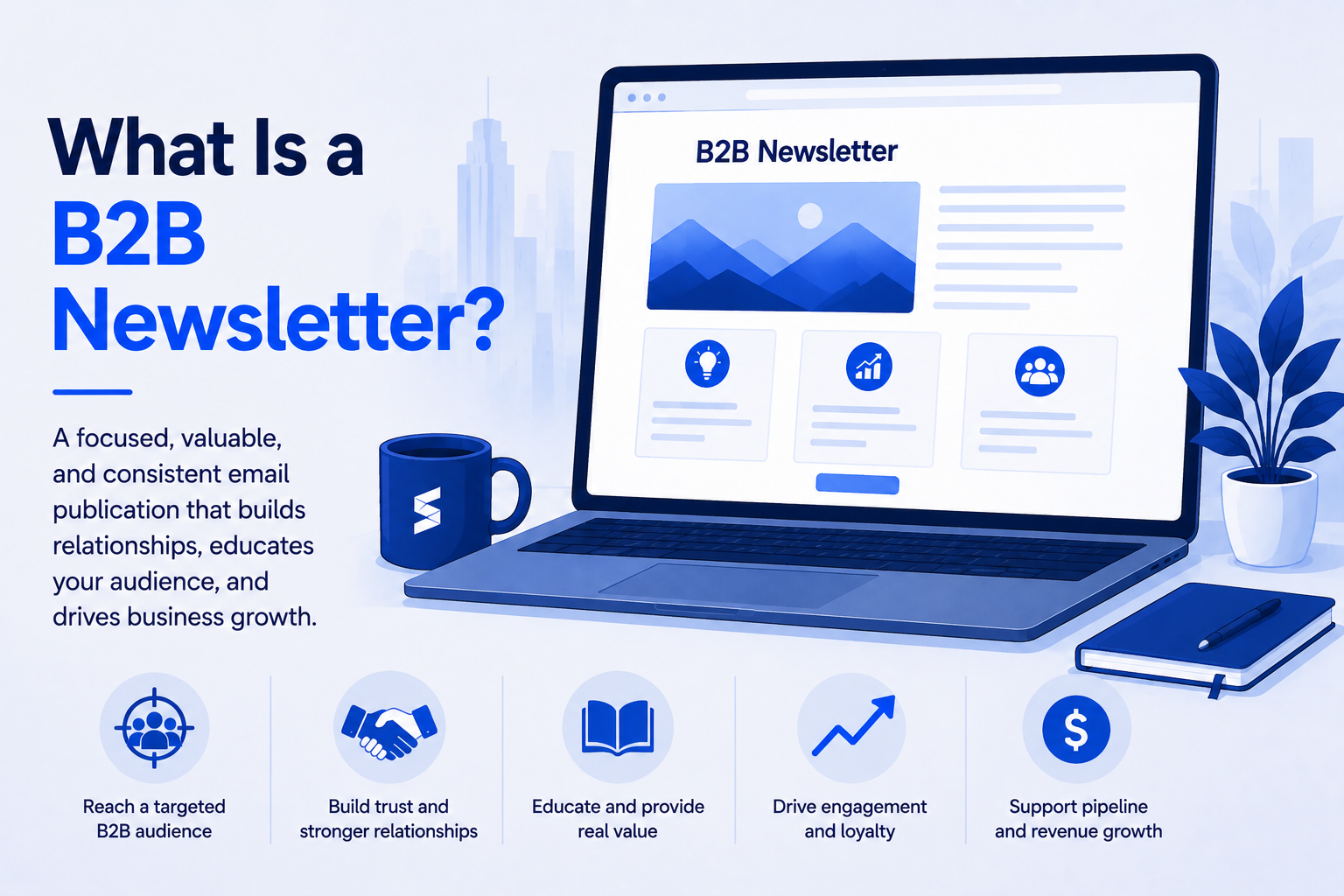
What Is a B2B Newsletter? (And How It's Different From a Consumer One)
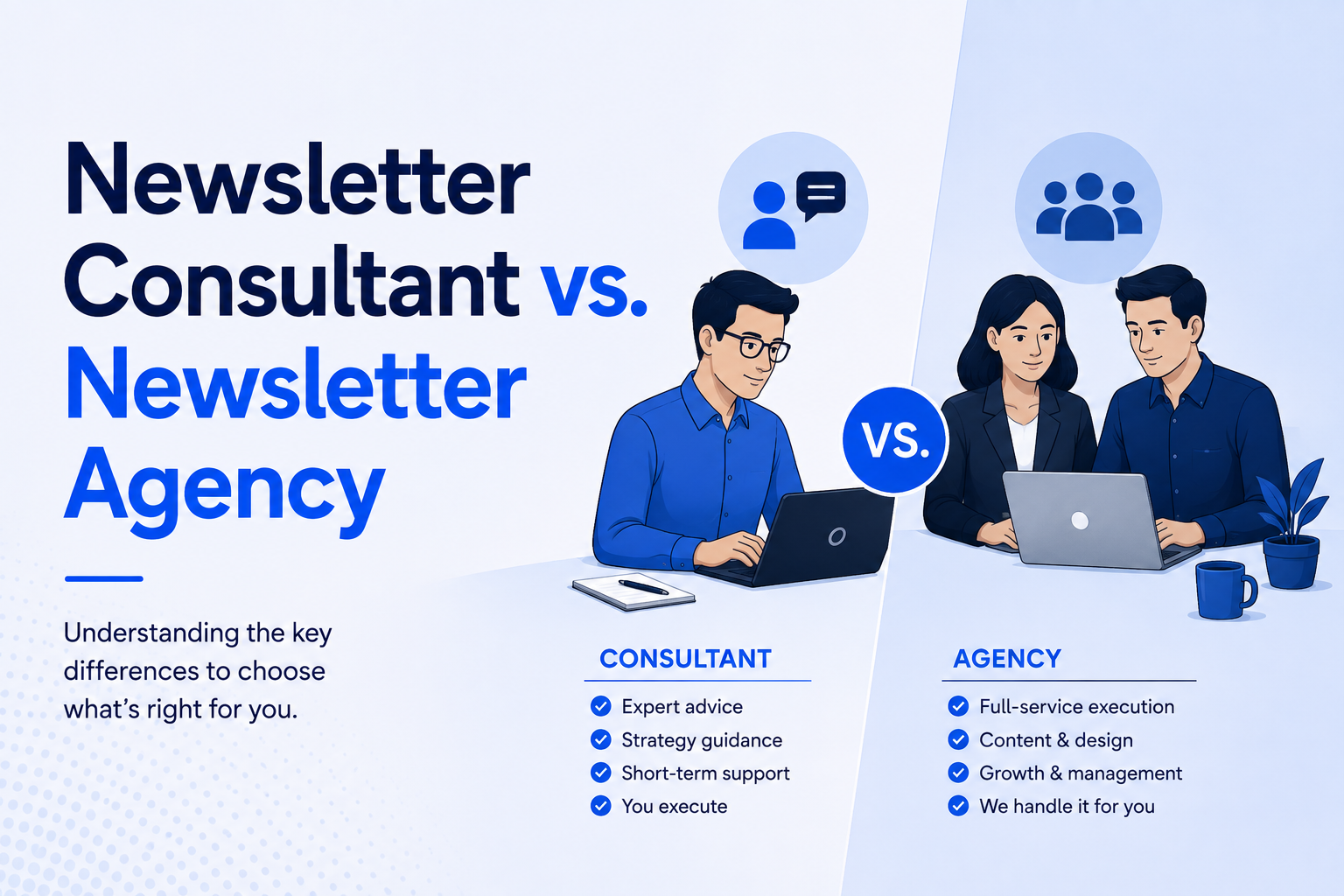
Newsletter Consultant vs. Newsletter Agency: Which One Actually Moves the Needle?
What Is a B2B Newsletter Agency (And What They Actually Do)