What Does a Good B2B Newsletter Actually Look Like?

Advice about B2B newsletters is abundant. Actual examples with explanations of why they work are much rarer.
This post fills that gap. We've broken down the key structural and strategic elements of high-performing B2B newsletters, using real examples and specific explanations of what makes each component effective.
If you're building a newsletter from scratch or trying to improve an existing one, this is the reference guide we'd want you to have.
The Anatomy of a High-Performing B2B Newsletter
The Subject Line
Your subject line has one job: get the email opened. Not to be clever. Not to summarise the issue. To create enough curiosity or perceived value that the reader opens instead of archiving.
Subject lines that work in B2B fall into three categories:
Specific utility: "The 3-step framework we use to cut B2B sales cycles by 30%" - this works because it's specific, the claim is credible, and the reader knows exactly what they're getting.
Curiosity gap: "The thing nobody tells you about newsletter growth" - this works when the newsletter has earned enough trust that readers believe the gap is worth closing. It fails with new subscribers who don't yet trust the editorial judgement.
Direct value statement: "This month: how to reduce customer churn in your first 90 days" - clear, no guesswork, high trust. Works especially well for newsletters that have been running long enough to have a consistent brand.
The subject lines that don't work in B2B: ones that feel like marketing emails. "Exciting news from [Company]" doesn't get opened. "Don't miss our latest newsletter" definitely doesn't.
The Opening Line
The single most underestimated element in newsletter writing.
Your opening line shows in the preview text of most email clients. It's the second thing after the subject line that determines whether the email gets opened. It sets the tone for every reader who does open.
The best B2B newsletter opening lines do one of three things: drop the reader directly into a specific scenario ("Last Tuesday, a client called with a problem I've seen 40 times."), make a counterintuitive claim that demands resolution ("Most B2B companies are optimising for the wrong newsletter metric."), or establish a real-world hook that creates immediate relevance ("Something changed in Q1 that's going to affect every company running a newsletter in your space.").
What doesn't work: starting with context. "In today's issue, we'll be covering..." is scene-setting that belongs nowhere in a newsletter. Start with the thing that makes the reader lean forward.
The Body Structure
High-performing B2B newsletters are structured for scanning first and reading second.
The reality of your subscriber's inbox: they're deciding whether to read your newsletter while also managing 40 other emails. They will scan before they commit. Your job is to make the scan rewarding enough that they stay.
Structural elements that help:
Clear H2 headers: that tell a complete story if you only read the headers. A reader skimming headers should understand your argument before reading a word of body copy.
Short paragraphs: two to four sentences maximum. Long paragraphs are a visual signal that this is going to be hard work. Short paragraphs signal that you've done the compression work for the reader.
Bold for the key claim in each section: not decoration, not emphasis, but a navigational aid. The reader skimming for value should be able to find it in the bold text.
The Point of View
The most common failure mode in B2B newsletter content is neutrality. Summaries of industry news. Roundups of things that happened. Lists of facts without a position on what they mean.
Neutral content doesn't build trust. It just adds to the noise.
The newsletters that people actually read - and forward to colleagues, and cite in conversations - take positions. They tell you what to think about the thing that happened, not just that it happened - but what it means. They're willing to be wrong, which means they're willing to say something that matters.
The test: read your last three issues and ask, after each one, what the reader was supposed to believe or do differently because they read it. If the answer is "nothing specific" - the issue was neutral, and neutral is forgettable.
The CTA
Every issue should have one primary call to action. Not five. One.
For a B2B newsletter, the most effective CTA in most issues isn't "book a call" or "visit our services page." It's "reply and tell me X." A reply CTA has a lower barrier to action, generates a direct conversation, and surfaces your warmest leads in your inbox without any additional sales infrastructure.
Save the hard commercial CTA ("book a call") for issues where you've just delivered exceptional value or where the content is directly related to a problem you solve commercially. Using it every week trains readers to skip it. Using it when it's genuinely warranted gets results.
The Closing
Most B2B newsletters end abruptly. The issue stops, there's a footer, done.
The best ones have a brief closing line that feels like a genuine sign-off from a person not a brand. Something that reminds the reader there's a human behind the content, who'll be back next week with something else worth reading.
It doesn't need to be long. "See you Tuesday" works. "If this was useful, the share button is below." Also works. The point is to create a sense of continuity that this is an ongoing relationship, not a one-way broadcast.
The One Thing That Ties It All Together
All of the elements above matter. But the thing that determines whether a B2B newsletter works in the long run isn't subject lines or structure or CTAs.
It's consistency of voice.
A newsletter where every issue sounds like it was written by the same person, from the same perspective, for the same audience that newsletter builds trust that compounds. Every issue makes the next one easier to sell.
Voice is the thing that makes subscribers feel like they know you. It's the reason someone opens your email instead of the 40 others in their inbox. It's not something you can optimise in a single issue it's the result of showing up, sounding like yourself, for long enough that people start expecting it.
Build the structure. But don't let the structure flatten the voice. The voice is the point.
Your newsletter won't build itself.

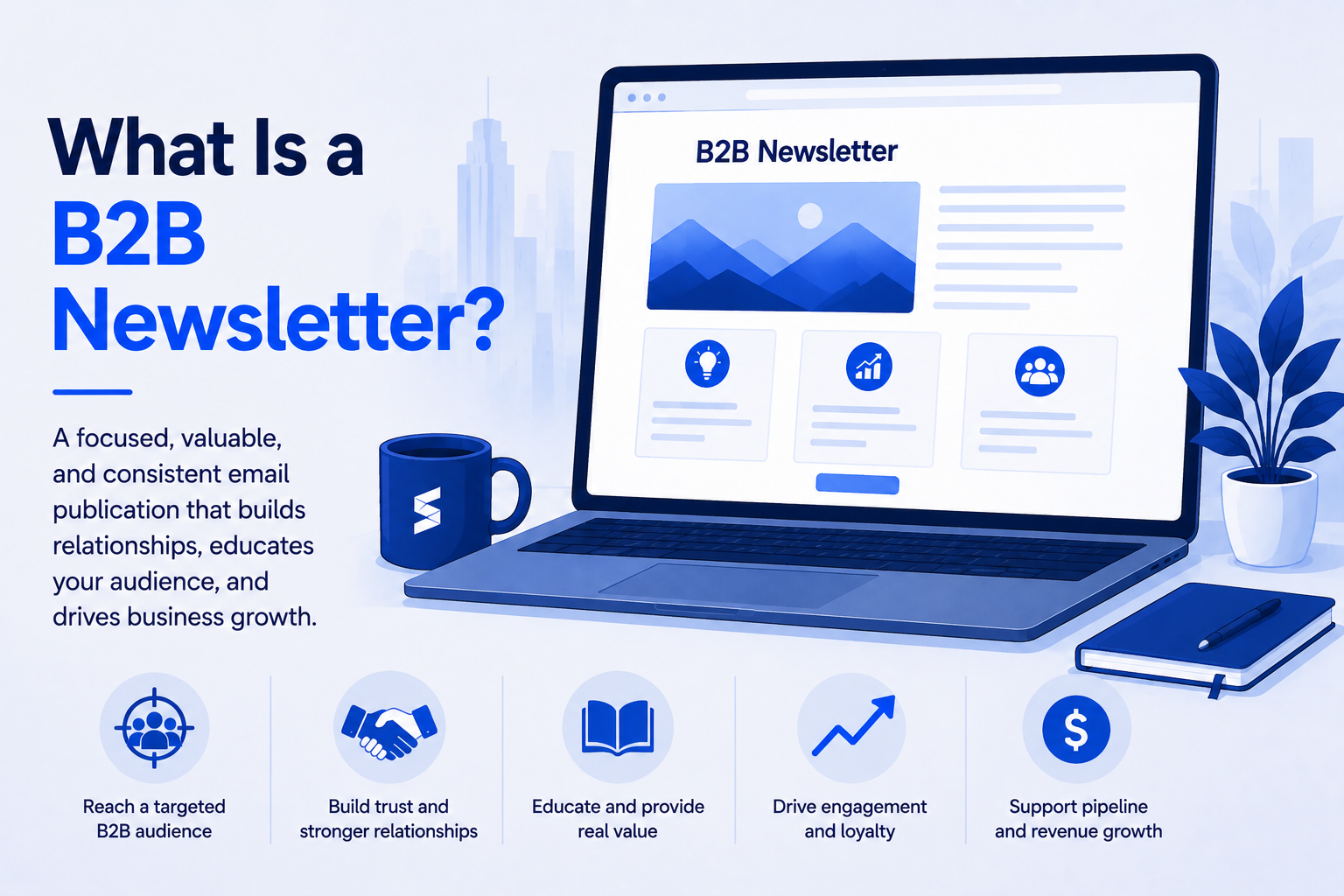
What Is a B2B Newsletter? (And How It's Different From a Consumer One)
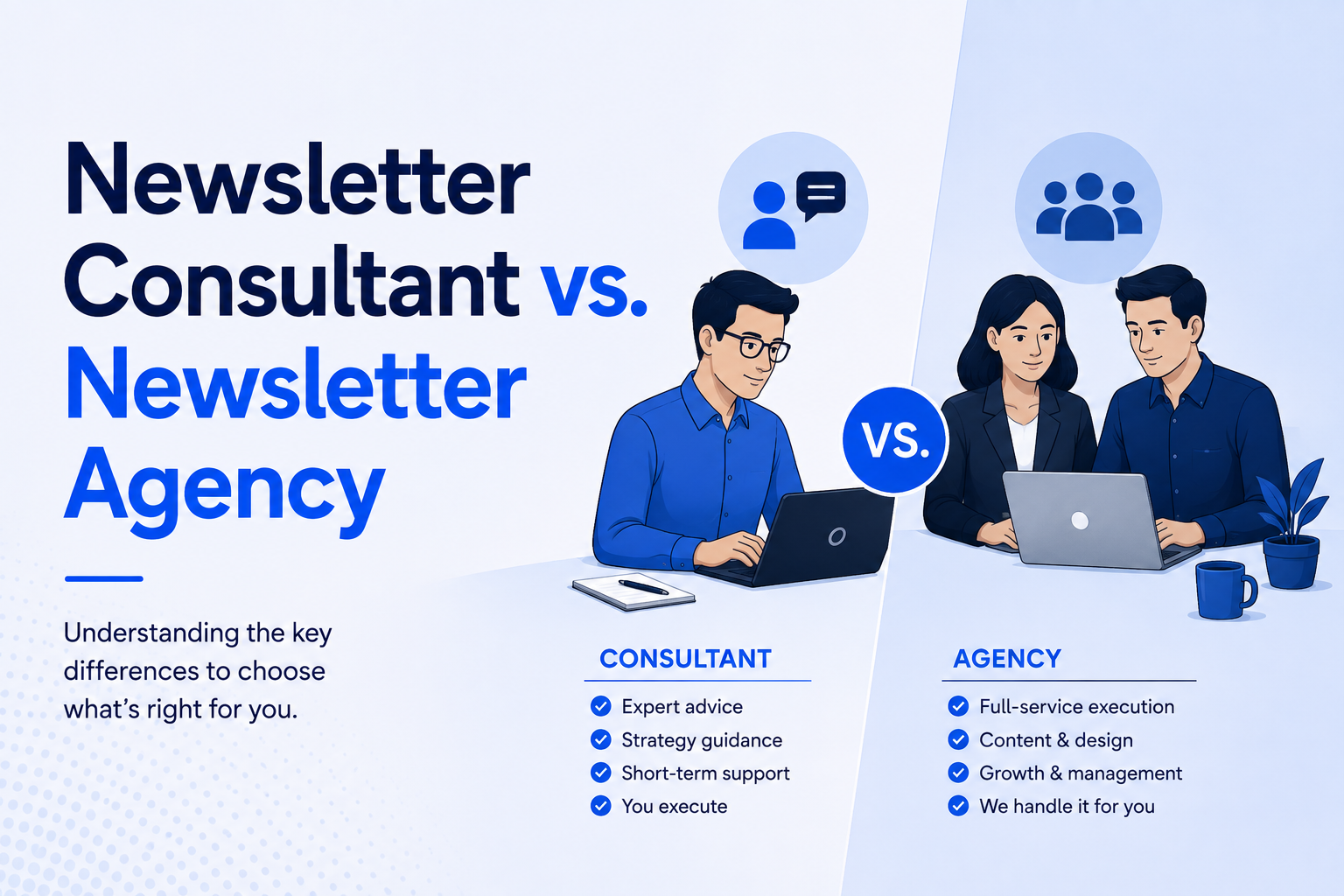
Newsletter Consultant vs. Newsletter Agency: Which One Actually Moves the Needle?

What Is a B2B Newsletter Agency (And What They Actually Do)