Newsletter vs. Cold Email/Outbound
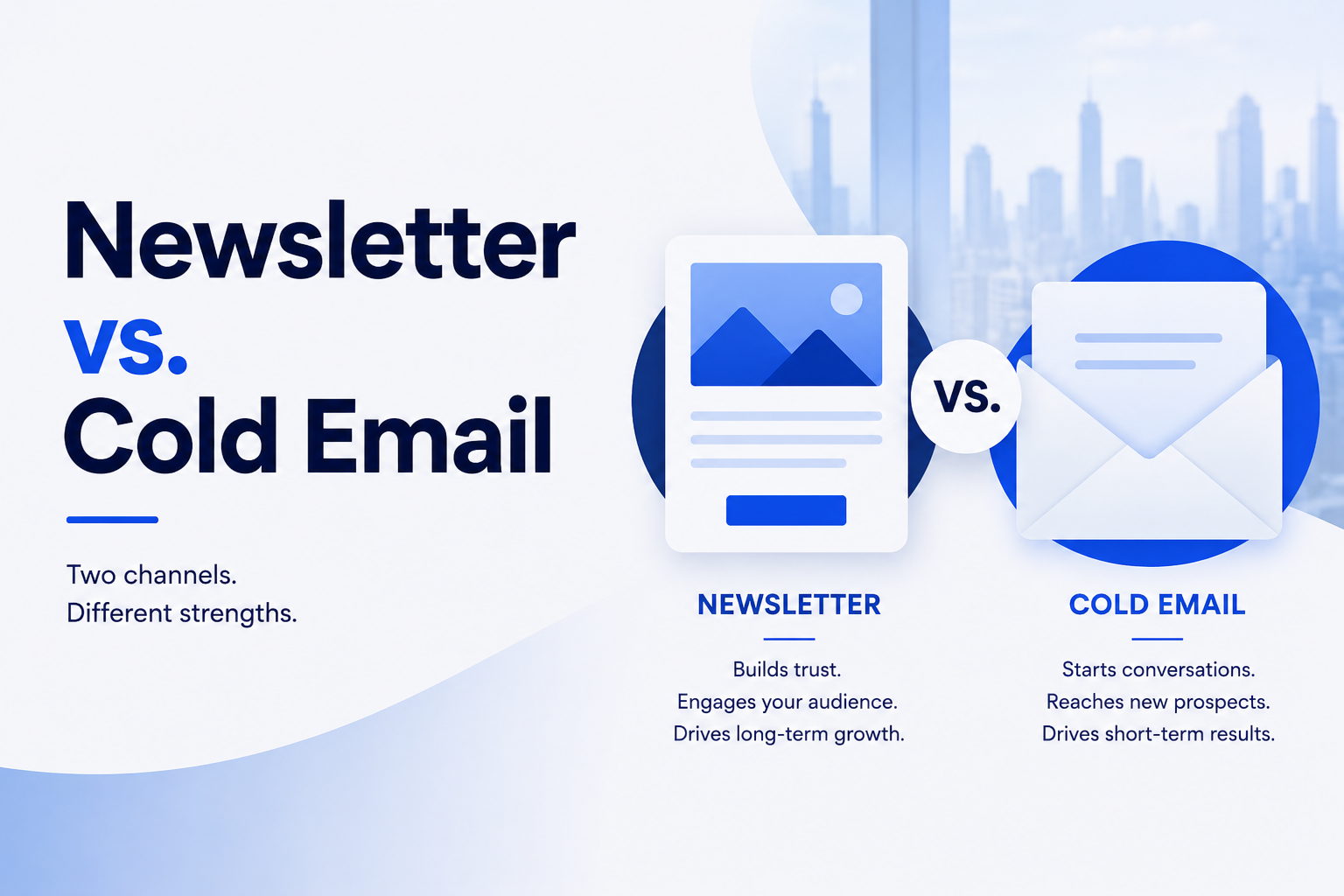

Cold outbound wins on speed.
A newsletter wins on everything that happens after.
Most companies treat this as a choice between the two, when the real question is which job each one is actually good at.
What Cold Outbound Actually Does Well
Outbound is fast. Build a list, write a sequence, start sending, and you can have meetings booked within days. It's targeted: you choose exactly who receives it based on firmographic or intent data. And it's controllable: volume goes up or down based on how much pipeline you need this month.
The tradeoff is reply rates that keep shrinking as inboxes get more crowded, and a relationship that starts cold every single time, with no accumulated trust from a previous touchpoint.
What a Newsletter Actually Does Well
A newsletter is slow to start and fast to compound. The first few months look unimpressive: a small list, modest open rates, no real pipeline yet. Then the list crosses a threshold where a meaningful number of subscribers already know and trust the company before any rep reaches out.
At that point, outbound to a newsletter subscriber converts differently than outbound to a cold prospect. It's not a stranger's email anymore. It's a follow-up to a relationship that already exists.
Fractional Source: A Case Where Outreach Alone Wasn't Enough
Fractional Source sells fractional sourcing services to state and local government agencies, a market with long sales cycles and buyers who are naturally cautious about outside vendors. Cold outreach alone was producing meetings, but slowly, and a lot of prospects went quiet after one call.
We built a newsletter aimed at the exact same job titles the outbound team was already targeting. Twelve months in: 25,000 subscribers, a 45% open rate, and multiple deals sourced directly from newsletter replies, deals that outreach alone hadn't been closing at the same rate.
The outbound motion didn't stop. It got easier, because a growing share of the people being contacted already recognized the name.
What This Looks Like Week to Week
In practice, the two channels start talking to each other pretty quickly. A rep pulls a list for a new outbound push and checks it against the newsletter's subscriber list first; anyone already reading gets a warmer opener instead of a cold one. A prospect who's gone quiet after a first outbound touch gets added to the newsletter instead of a fourth follow-up email, so the relationship keeps developing without another cold ask landing in their inbox.
Over time, the split shifts. Early on, almost all pipeline comes from outbound because the newsletter list is still small. A year in, a growing share comes from newsletter replies and warmer outbound touches to subscribers, while cold outbound keeps doing what it does best: reaching people who've never heard of the company at all.
The Real Answer: They Compound Each Other
The strongest version of this has outbound reps using the newsletter as a resource: forwarding a relevant past issue instead of writing a cold pitch from scratch, referencing a specific issue in a follow-up, using reply-thread language from the newsletter to sharpen outbound messaging.
Companies that run both, with the newsletter feeding warmth into the outbound motion, tend to see outbound reply rates improve over time as the subscriber base grows, even without changing anything else about the outbound sequences themselves.
What to Track If You're Running Both
A few numbers make the relationship between the two channels visible instead of assumed. Reply rate on outbound sent to newsletter subscribers versus outbound sent to cold prospects, tracked separately, usually shows the gap directly. Time-to-first-meeting for a subscriber who converts through the newsletter versus one sourced entirely through outbound shows whether the newsletter is actually shortening the path.
Worth tracking too: how often a rep references or forwards a newsletter issue in an outbound sequence, and whether those sends perform better than the standard template. If nobody's measuring that overlap, it's easy to assume the two channels are separate when in practice the better-performing one is quietly borrowing credibility from the other.
Which One to Start With
If you need pipeline this quarter and have zero existing audience, outbound is the faster lever. If you're building for the next year and want a channel that gets cheaper and more effective the longer it runs, the newsletter is the better long-term bet.
Most companies eventually need both. The mistake is picking one and assuming it replaces the other permanently.
Your newsletter won't build itself.

Newsletter vs. Cold Email/Outbound
What Is a B2B Newsletter? (And How It's Different From a Consumer One)

Newsletter Consultant vs. Newsletter Agency: Which One Actually Moves the Needle?