Is a B2B Newsletter Worth It? (Cost/Benefit Breakdown)


Before anyone searches for a newsletter agency, they're usually asking a simpler question first: is this actually worth doing at all, or is it another marketing project that eats a quarter of budget and produces a nice-looking archive page and not much else.
Fair question. Here's an honest breakdown.
The Real Costs
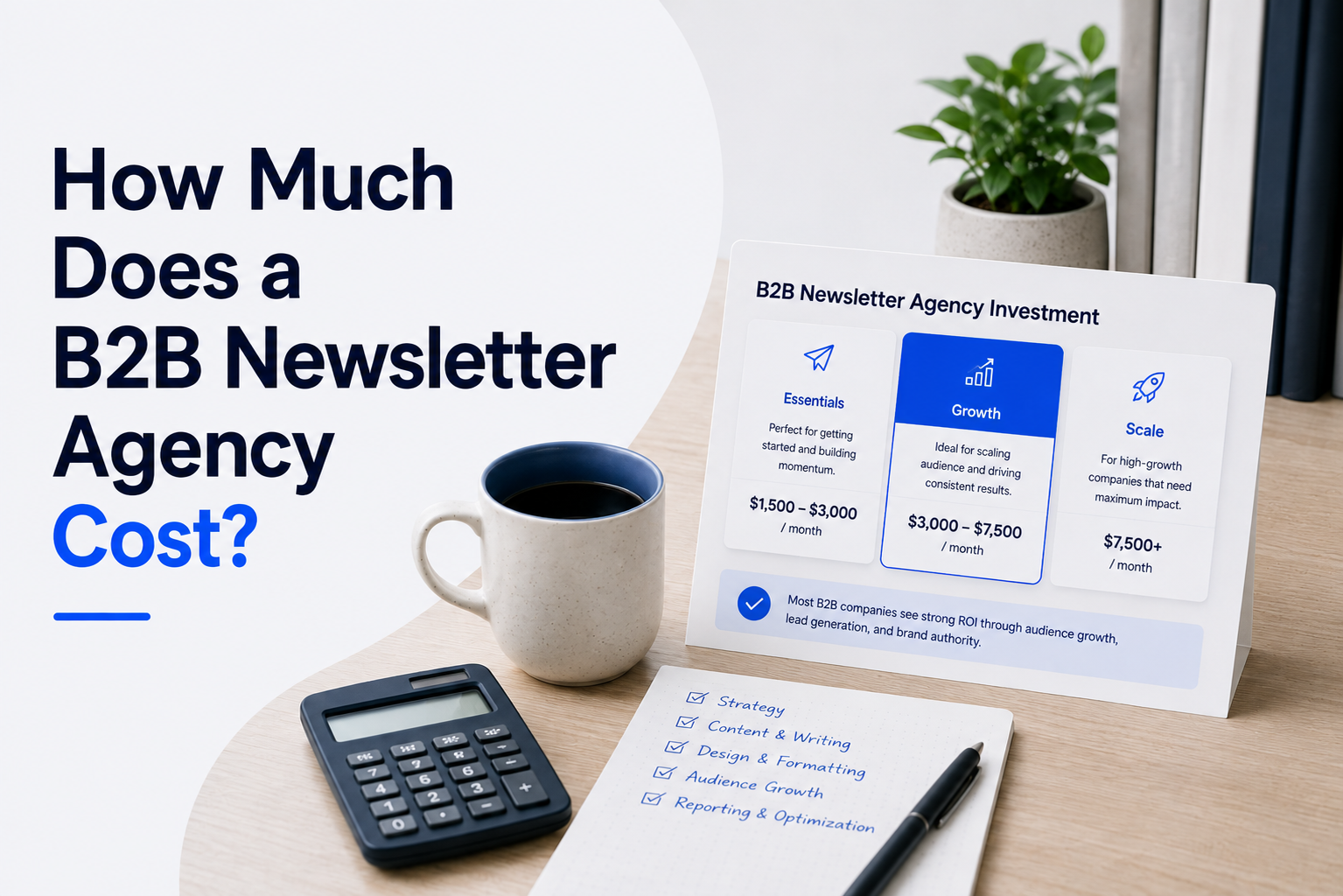
Running a newsletter properly costs more than most people expect going in. Writing time, whether internal or outsourced. A platform subscription that scales with list size. Design and formatting time per issue. Growth work, which is ongoing, not a one-time setup. Deliverability monitoring, easy to skip until it costs you.
Done in-house with existing staff, the visible cost looks low but the hidden cost is real: someone's time is going toward the newsletter instead of whatever else they'd otherwise be doing. Breaking downwhat running one in-house actually costs, time included, is worth reading before you commit to either path.
The Real Benefits, With Numbers
A well-run B2B newsletter at 1,000 to 5,000 engaged subscribers regularly produces open rates between 35 and 50%, far above typical email marketing benchmarks, because the list is small and intentional rather than broad and generic.
More importantly: replies. A subscriber hitting reply is a warm lead with zero cold outreach involved, sitting in an inbox instead of requiring a sales team to go find it. We've written a full attribution guide for measuring this properly, since "it built trust over time" isn't a number a CFO can evaluate on its own.
The Timeline Nobody Likes Hearing
A newsletter is not a fast channel. Meaningful pipeline influence usually shows up somewhere between four and eight months in, not week two. Anyone promising fast results from a newsletter is either misunderstanding the channel or overselling it.
That timeline is the actual tradeoff against paid channels. The cost-per-lead comparison against paid ads tells the real story: paid ads convert faster and cost more per lead over time; a newsletter costs more patience upfront and compounds afterward, cheaper per lead the longer it runs.
A Simple Way to Pressure-Test the Decision
Before committing budget, it's worth answering three questions honestly. Does the company generate enough real material week to week, customer conversations, internal expertise, specific results, to fill an issue without stretching for content? Is there patience internally for a four-to-eight-month runway before leadership expects to see pipeline numbers move? And is there someone, internal or outsourced, who will actually own this every single week, not just for the first month of enthusiasm?
A yes to all three is a strong signal the investment will pay off. A no to any one of them is worth addressing before spending a dollar, because that's usually the specific reason newsletters stall out six months in.
A Simple Way to See the Math
Picture two companies spending the same amount on marketing over a year. One puts it entirely into paid ads, which produce a steady, predictable stream of leads for as long as the spend continues, and stop the moment it does. The other splits spend between ads and a newsletter. The ad-driven leads look similar in year one. But by year two, the newsletter company has an asset that didn't exist before: a list of a few thousand people who already trust them, costing very little to keep reaching, and producing warm replies without any incremental spend.
That compounding effect is the actual case for a newsletter. It's not that it beats paid ads on speed. It's that ad spend buys leads only while you're paying, and a newsletter buys an audience you keep.
When It's Genuinely Not Worth It
A newsletter isn't the right move for every company. If there's no consistent way to source content (no customer conversations, no internal expertise being generated week to week), the newsletter will read as thin no matter who writes it. If the sales cycle is extremely short and transactional, a slower trust-building channel may not match how the business actually sells.
Both of those are real disqualifiers, not hypothetical ones. It's worth ruling them out honestly before spending a quarter finding out the hard way.
When It Clearly Is
If your buyers have a long consideration window, if your company has real expertise or customer stories worth sharing regularly, and if you can commit to the four-to-eight-month runway before expecting pipeline impact, the math tends to work in your favor. The subscriber base becomes an asset that compounds rather than a channel you have to keep paying to access.
Your newsletter won't build itself.

How Much Does a B2B Newsletter Agency Cost?
Is a B2B Newsletter Worth It? (Cost/Benefit Breakdown)
Newsletter Management Services: What's Actually Included (A Breakdown)