How The Hustle Turned Its Audience Into a $27 Million Business

*** Every week, we pick apart how the world's best media brands got to where they are. This post is the long read. Growth Curve, our weekly newsletter, is the sharp version: same insight, shorter format, straight to your inbox. Subscribe free here. ***
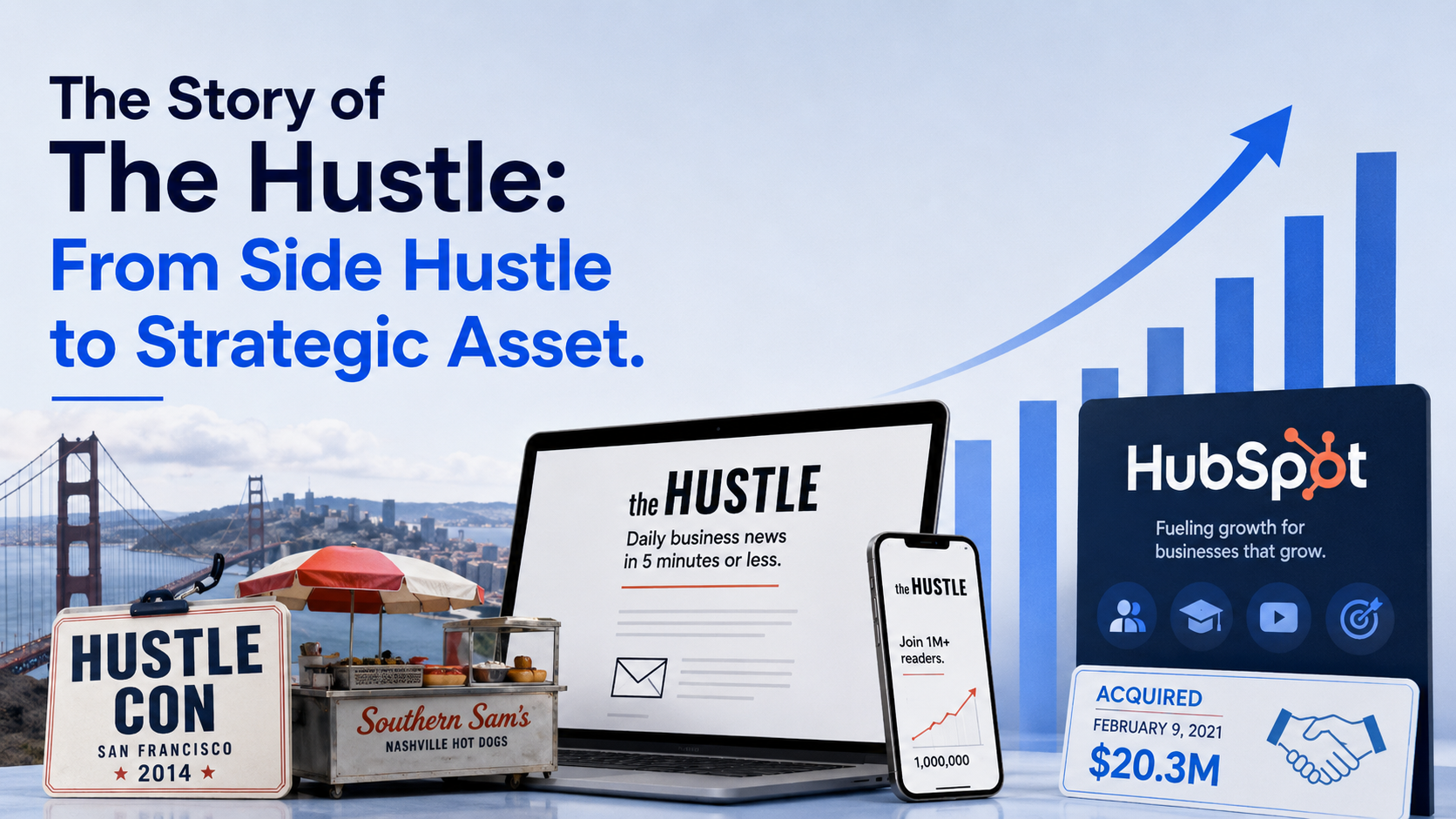
In 2014, Sam Parr organized a conference in San Francisco called Hustle Con, a single-day event where founders without technical backgrounds explained how they built their companies. The event turned a profit in its first year. Sam had arrived in the city after running a hot dog stand in Nashville called Southern Sam's, and the conference showed him that he could assemble an audience of people interested in starting and growing businesses. That audience became the foundation for The Hustle.
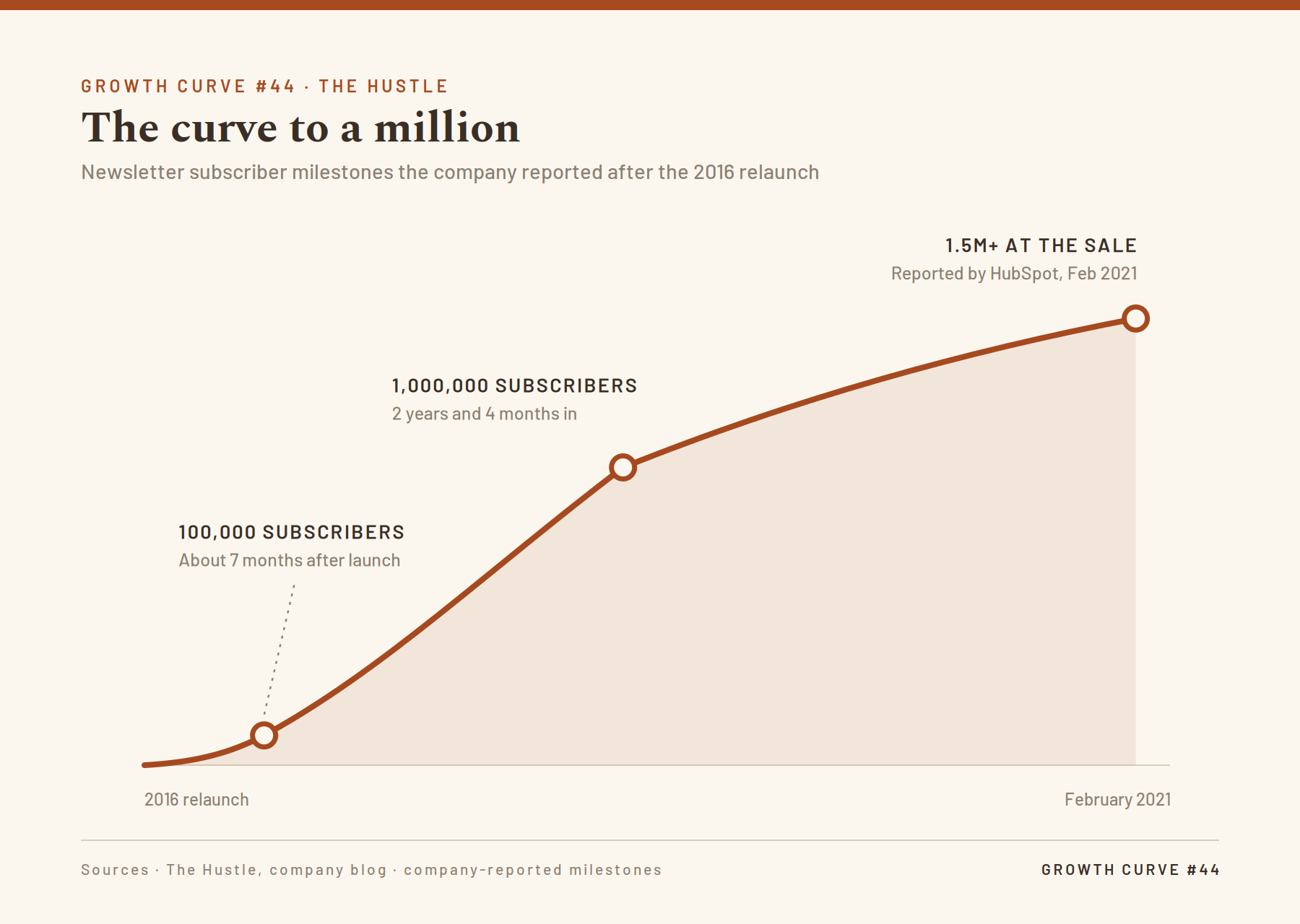
In 2016, Sam relaunched The Hustle as a daily business newsletter, drawing on the model theSkimm had proven for general news. The first sends went to a small list of friends and LinkedIn contacts. The company raised roughly $1 million in total funding, including an angel round reported at about $800,000, and kept the operation lean. By the company's own reporting, the newsletter reached 100,000 subscribers about seven months after launch and 1 million subscribers two years and four months after launch. The content was short and aimed at an entrepreneur, a startup employee, or a small business owner who found traditional business media stiff and slow.
Sam made one structural decision early that shaped the business for years. He treated email as owned property and built the company's growth engine around it. The Hustle's own writing warned that a media company built primarily on social traffic could be damaged by a single algorithm change, and the company grew instead through referrals, an ambassador program, organic sharing, and paid acquisition that fed the email list directly. The company owned its entire relationship with its readers.
The Revenue Engine
The Hustle earned most of its money from advertising inside the daily newsletter. Sponsors paid to reach a concentrated audience of business leaders, and costs stayed low because a small editorial team produced a single daily newsletter. By 2020, Sam said advertising revenue alone had exceeded $10 million annually. Later accounts placed total annual revenue before the sale at roughly $12 million to $15 million, although the private company never published audited financial statements. Axios reported that the business was profitable.
In June 2019, the company launched Trends, a paid research product priced at $299 a year. Trends packaged the research the editorial team was doing into reports on emerging business opportunities, and the presale reportedly brought in tens of thousands of dollars. Around the time of the acquisition, accounts placed Trends at roughly 10,000 to 15,000 paying members. The same year, Sam and investor Shaan Puri launched My First Million, a podcast in which the two discussed business ideas. The show grew into a widely followed business podcast.
By the end of 2020, The Hustle was a three-product company. A free daily newsletter reached more than 1.5 million readers. A paid research arm generated recurring subscription revenue. A podcast reached a large and growing audience of the same kind of listener. Every product served an identical person, the operator or aspiring operator of a growing business.
HubSpot Knew How to Monetize the Audience
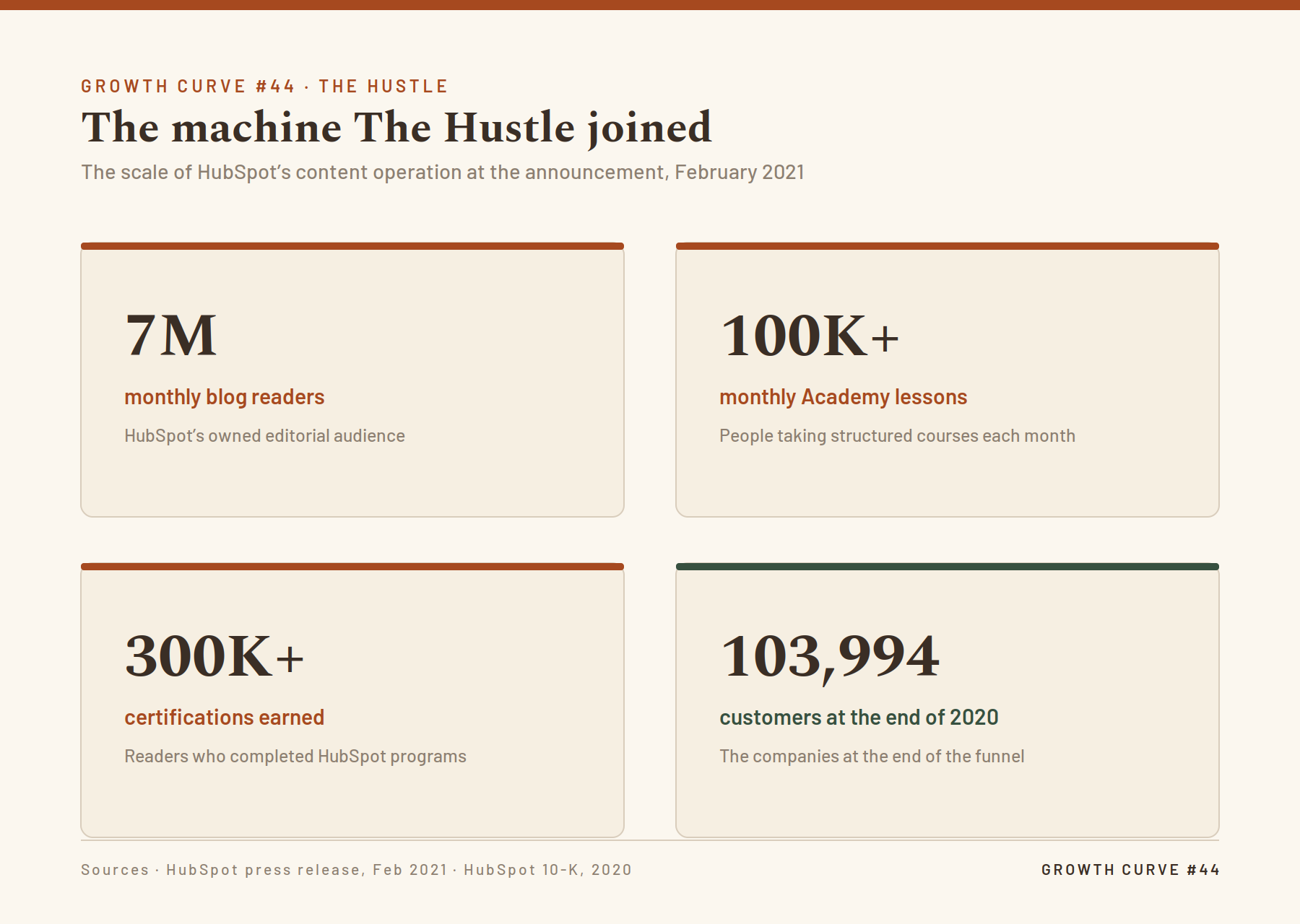
HubSpot announced the acquisition of The Hustle on February 3, 2021, and its SEC filings record the deal as completed on February 9. The company had spent more than a decade using educational content to acquire software customers. Kieran Flanagan, then SVP of marketing, said that for many customers the first introduction to HubSpot came through its blog, Academy, and YouTube content. At the time of the announcement, HubSpot said 7 million people read its blogs each month, more than 100,000 people took Academy lessons monthly, and over 300,000 people had earned a HubSpot certification.
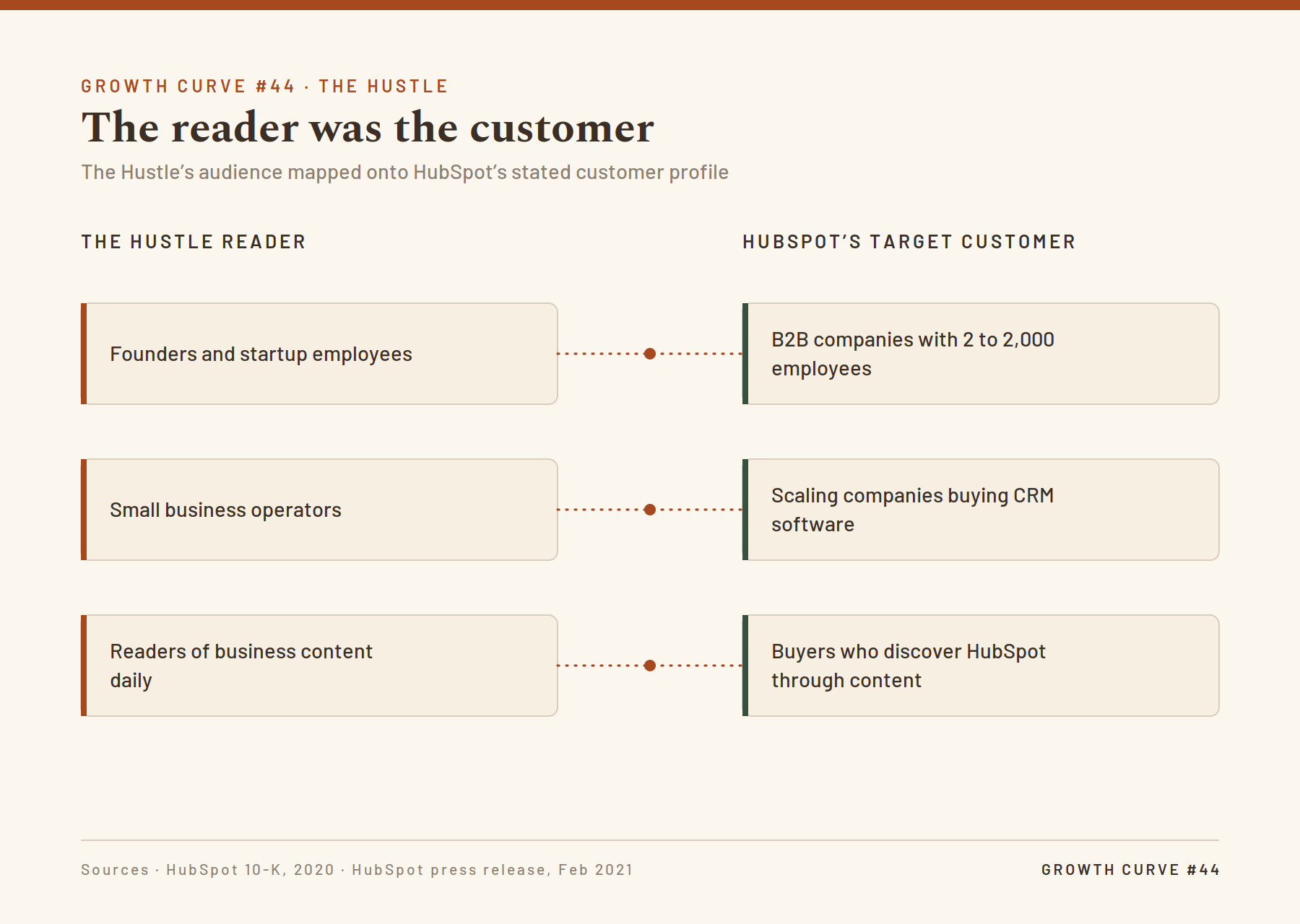
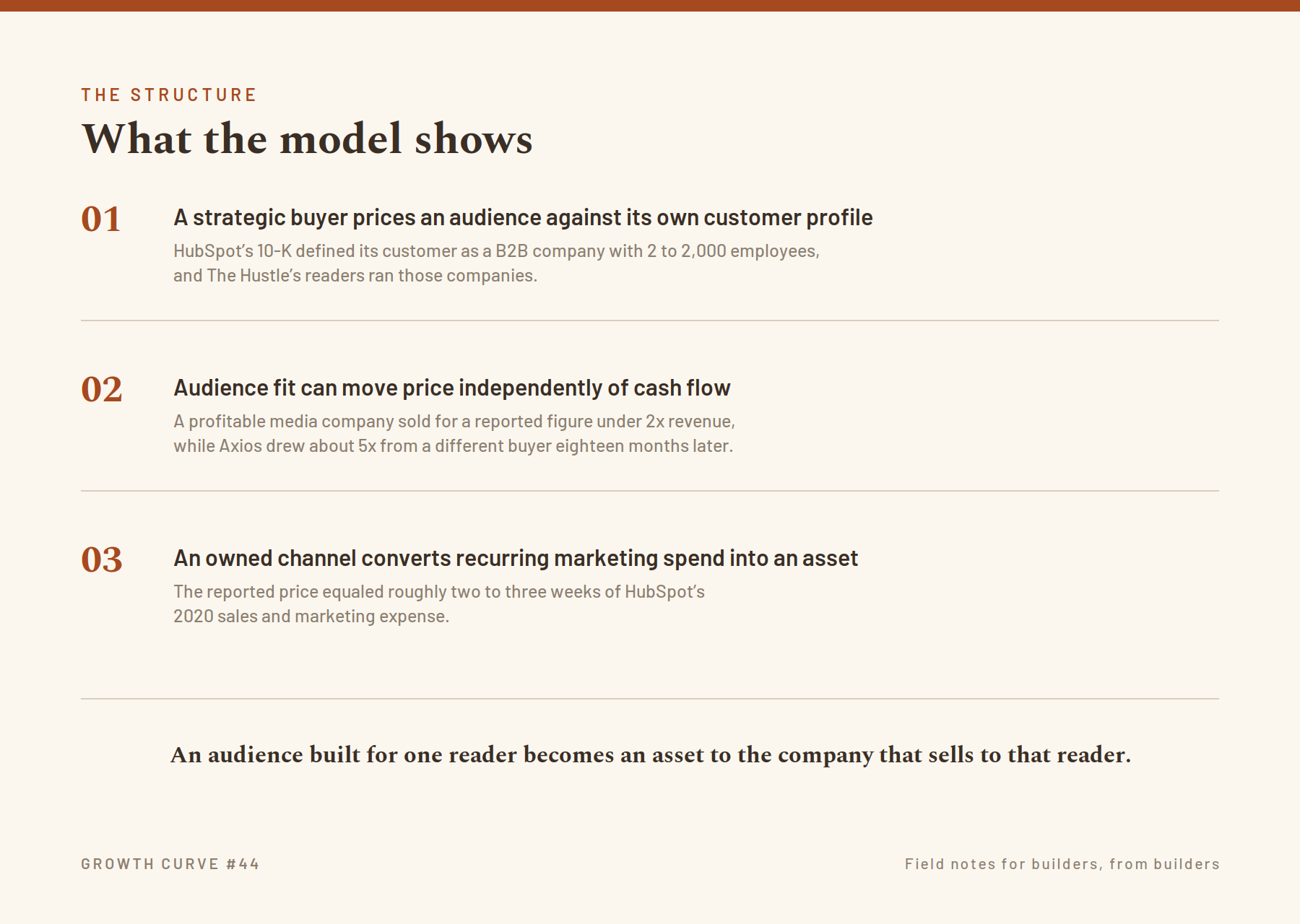
HubSpot's 10-K for 2020 described the company's target customer as a business-to-business company with between 2 and 2,000 employees. The filing reported $883 million in revenue, 103,994 customers, and a net loss of about $85 million for the year. HubSpot was itself valued by the market primarily on expected growth rather than current earnings, which made The Hustle's audience growth and lead-generation potential strategically relevant to HubSpot.
The fit between the two audiences was close to exact. The Hustle's readers were founders, early employees, and small business operators. HubSpot’s ideal customer was the same. Axios reported that the acquisition could help HubSpot generate leads while reducing its dependence on Google and Facebook advertising. HubSpot spent approximately $452 million on sales and marketing in 2020, including staff, commissions, and programs alongside paid media.
HubSpot Paid for Distribution
Axios initially valued the transaction at roughly $27 million. HubSpot's SEC filings valued the acquisition at $20.3 million, including $17.2 million in net cash and roughly $3.1 million in other consideration. Sam has separately said the total he received exceeded $20 million, and the equity component appreciated in the months after closing.
A profitable media company with reported annual revenue of $12 million to $15 million sold for well under two times revenue. Eighteen months later, Cox Enterprises acquired Axios at a $525 million valuation that The New York Times reported was about five times projected revenue. Insider had taken a majority stake in Morning Brew in late 2020 at a valuation reported around $75 million. The differences between the deals cannot be explained by audience size alone. The Hustle sold after COVID eliminated its events business, but its core media operation continued to grow. Morning Brew sold earlier in the pandemic through a majority-stake transaction with an earn-out, while Axios sold later as a much larger and more diversified business.
On the Axios estimate of $27 million, HubSpot paid about $18 per newsletter subscriber. On the $20.3 million filing figure, the price works out to roughly $13.50. The calculation understates and overstates the asset in different ways. Only a portion of those subscribers would ever become HubSpot prospects. In exchange, HubSpot gained repeated permission-based access to a large audience that overlapped substantially with its stated customer profile, and it converted a recurring marketing expense into a durable owned channel. A general news list of the same size would have carried far less strategic value for HubSpot.
After the Sale
HubSpot moved quickly to build on the asset. It launched the HubSpot Podcast Network in May 2021 with My First Million among its inaugural shows, and the podcast continues to run as a HubSpot Media property in 2026, with Sam and Shaan continuing to host. The Hustle newsletter continued publishing daily under HubSpot ownership, and the company's homepage now describes its readership as more than 2 million, a figure that comes from the company's own marketing. Trends was eventually converted from a paid subscription community into a free HubSpot-owned research and content property.
Sam handed his operating responsibilities to HubSpot after the transition and stepped away from the newsletter's day-to-day work. He co-founded Hampton in 2022 and announced it publicly in March 2023, describing it as a vetted private community for founders and executives of high-growth companies.
Where the Deal Stands Now
Five years on, the acquisition is an unusually efficient distribution purchase. At HubSpot's 2020 spending levels, the reported price equaled roughly two to three weeks of the company's sales and marketing expense, and in exchange HubSpot acquired a daily channel into more than 2 million inboxes belonging to readers who resembled its target customer. The Hustle kept publishing, the podcast kept growing, and the audience continued expanding under the new ownership.
The Hustle’s value came from the commercial fit between its audience and its buyer. Sam built a trusted daily newsletter for founders, operators, and future business owners. HubSpot already had products for that group and a mature system for converting attention into customers. The acquisition gave HubSpot direct access to an audience it had spent years trying to reach, while giving The Hustle a buyer capable of earning far more from each reader than advertising alone could produce. The deal worked because the audience and the product were built for the same person.
*** Every week, we pick apart how the world's best media brands got to where they are. This post is the long read. Growth Curve, our weekly newsletter, is the sharp version: same insight, shorter format, straight to your inbox. Subscribe free here. ***
Your newsletter won't build itself.


The 2000s Blog That Keeps Finding New Monetization Models
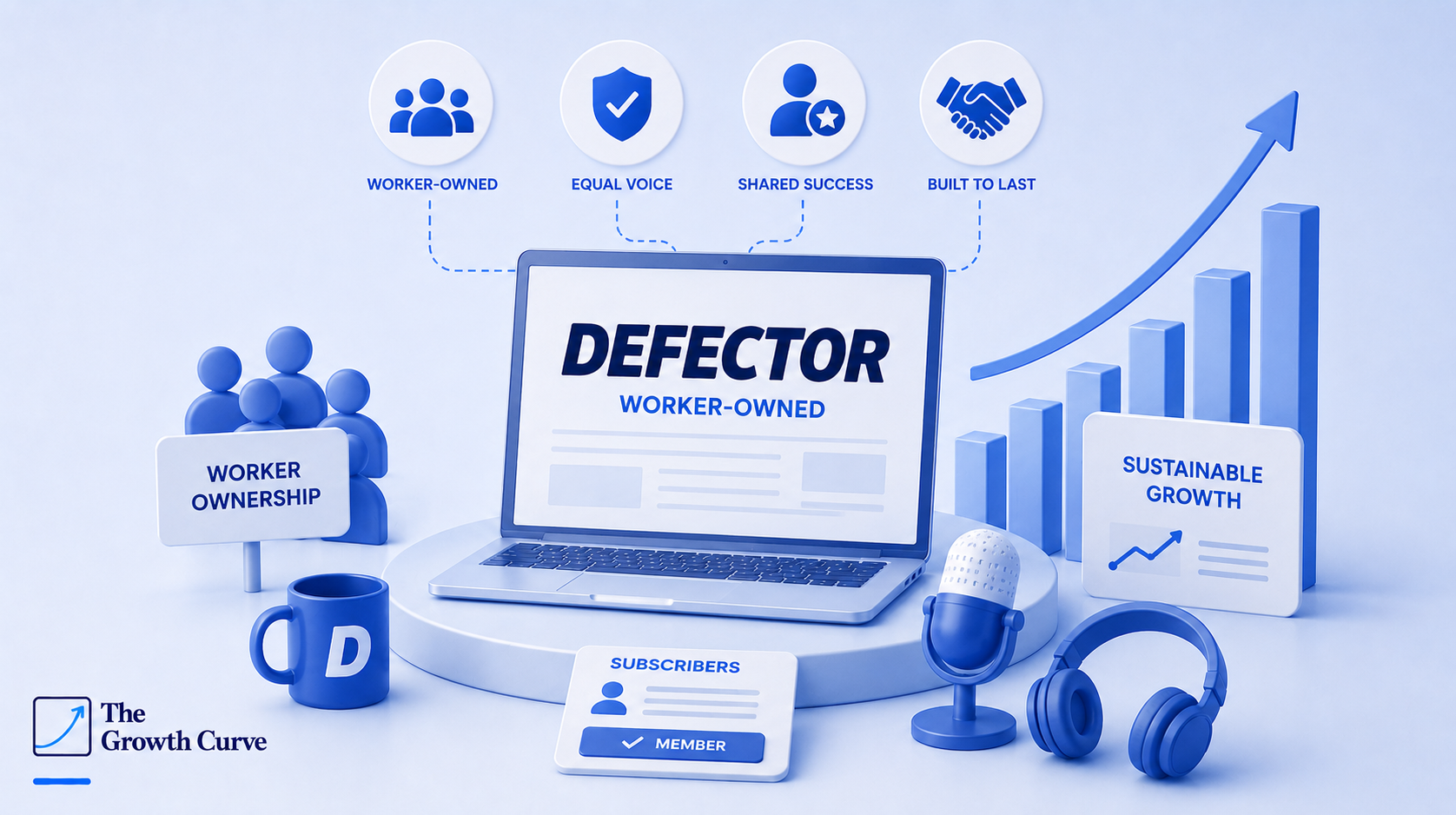
How Deadspin's Former Staff Built a Worker-Owned Media Company Without Outside Investors
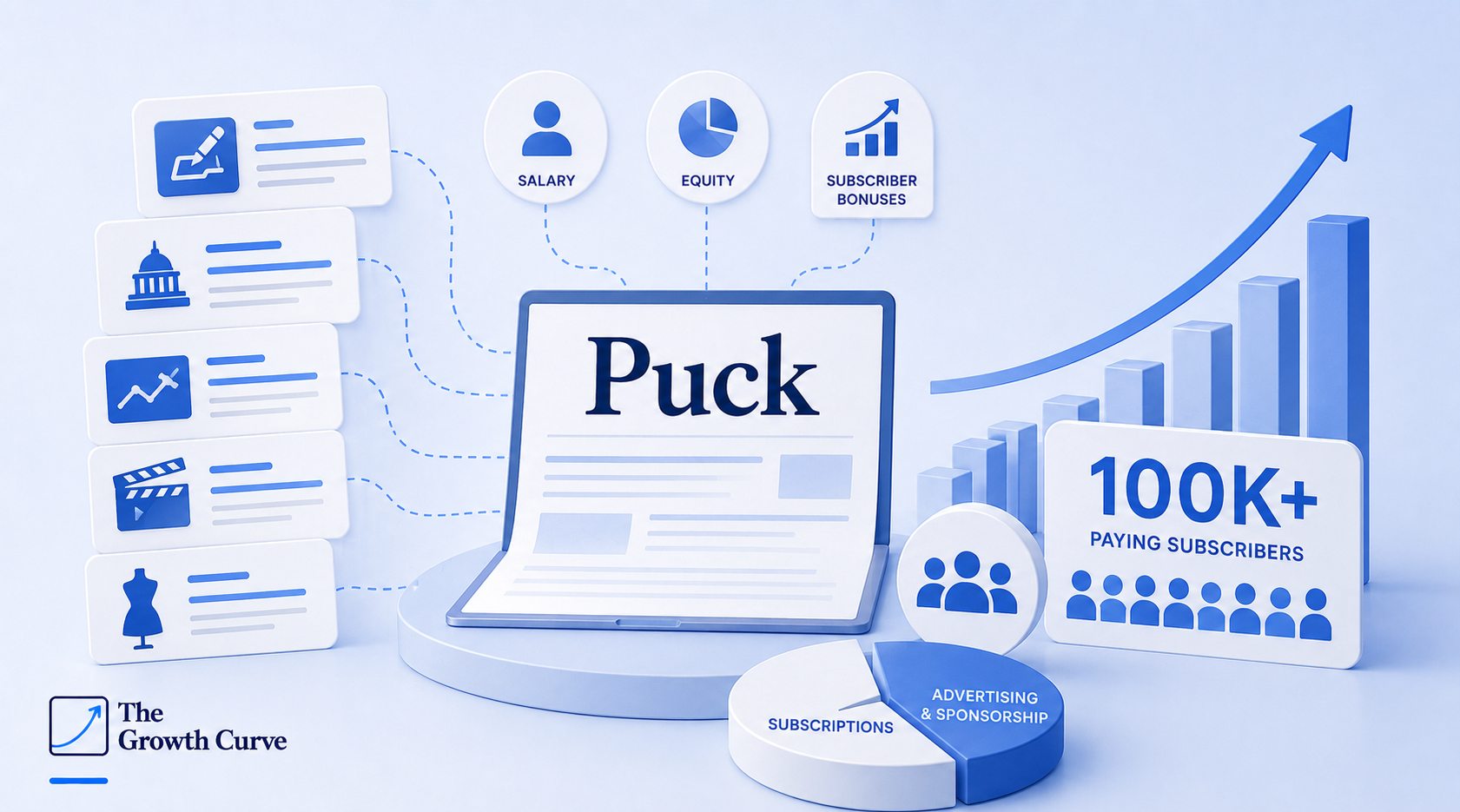
Inside Puck’s Bet on Writer Ownership