B2B Newsletter Lead Magnets That Actually Work
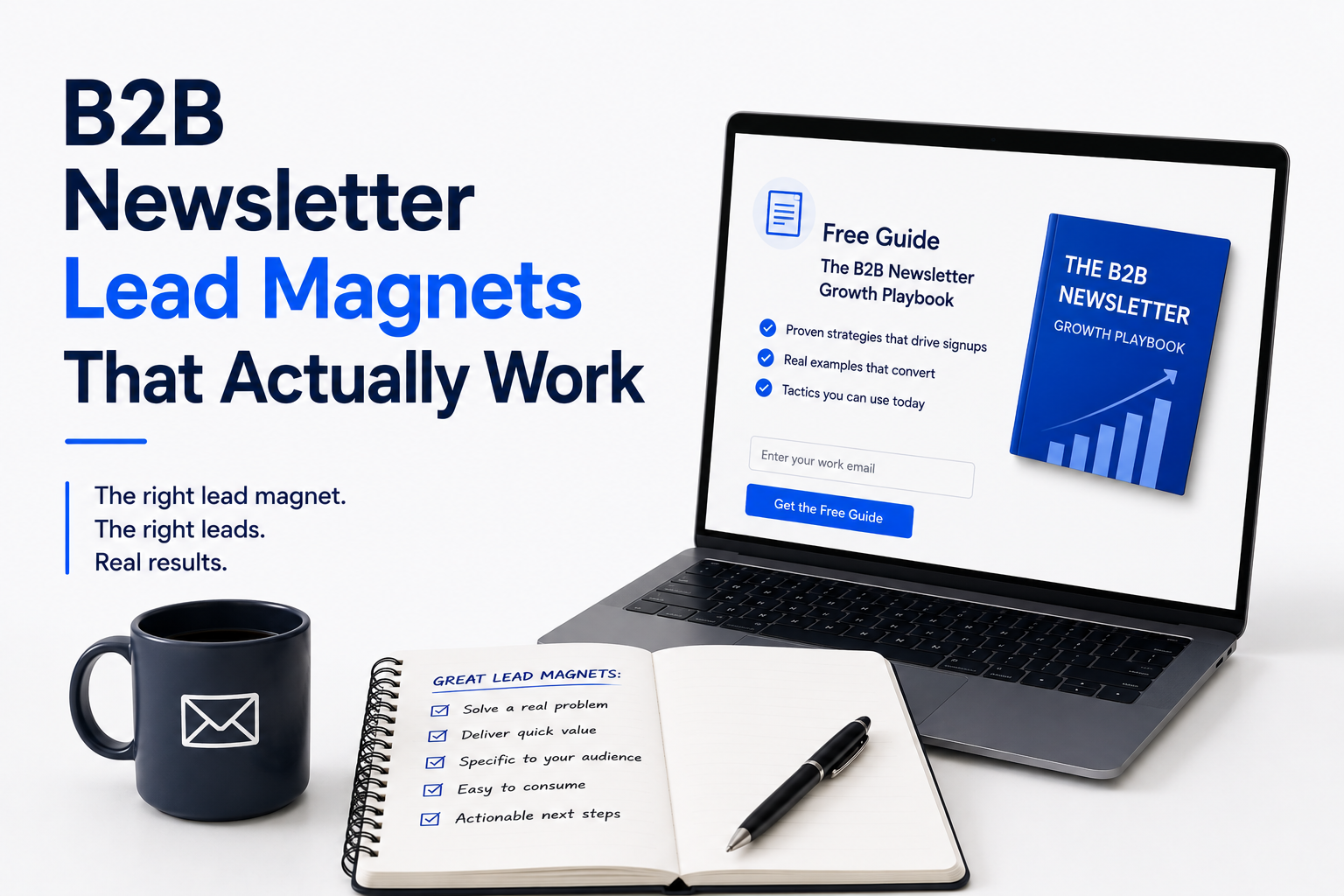

Most B2B newsletter lead magnets are useless.
Not because the idea is wrong offering something valuable in exchange for a subscription is sound. But because the execution is almost always off. A 47-page whitepaper nobody reads. An "exclusive report" that's really just a reformatted blog post. A webinar replay from 2022.
The lead magnet problem in B2B is a specificity problem. Generic content gets generic subscribers. And generic subscribers don't buy.
This guide covers the formats that actually work for B2B newsletter growth and more importantly, the principle behind why they work.
What a Lead Magnet Is Actually For
Before format, get the purpose right.
A lead magnet isn't just a subscriber acquisition tool. It's the first signal your new subscriber receives about what your newsletter will do for them. If the lead magnet is vague, they'll expect the newsletter to be vague. If it solves a specific problem immediately, they'll expect the newsletter to keep doing that.
The best B2B lead magnets do two things at once: they attract the right people (your ICP, not everyone) and they filter out the wrong ones. A lead magnet titled "The Finance Leader's Guide to Reducing Close Time" doesn't appeal to everyone and that's exactly the point.
The Formats That Work
1. The Diagnostic Framework
A simple tool that helps your subscriber assess their current situation against a standard. Not a quiz. A framework a set of questions or criteria that tells them where they stand.
Why it works: your ICP uses it immediately, and the result of using it often reveals a gap they need help filling. If you work with B2B companies on their sales process, a "Sales Process Audit: 12 Questions to Find Where Deals Are Stalling" attracts exactly the right person and starts the commercial conversation before you've said a word.
Format: one-page PDF, maximum. Shorter is better. A diagnostic that takes 20 minutes to complete won't get used. One that takes three minutes will.
2. The Swipe File
Collected examples of something your ICP wants to do well email sequences, subject lines, job descriptions, proposal templates, outbound message formats.
Why it works: it's immediately useful and requires no interpretation. The person subscribes, downloads the file, and gets value within minutes. That's the experience you want to create.
The specificity rule applies here too. "50 email subject lines that increased open rate" is weak. "12 subject lines that generated replies from heads of procurement at manufacturing companies" is specific enough to be worth subscribing for.
3. The Checklist
A structured list of steps for a process your ICP regularly needs to execute.
This is the format most people default to, and it can be excellent or terrible depending on execution. A generic "10-step content marketing checklist" attracts no one in particular. A "B2B Newsletter Launch Checklist: Everything to Set Up Before Issue One" attracts exactly the person considering whether to start a newsletter which, if you're a newsletter agency, is precisely your ICP.
Make checklists actionable at every step. If a step can't be ticked off as done, it's not a checklist item it's a vague suggestion.
4. The Calculator or Estimator
A simple tool that helps your subscriber put a number on something they currently can't quantify.
For a financial services newsletter: "Calculate what you're leaving on the table with your current accounts payable process." For a recruitment newsletter: "Estimate the true cost of a bad hire in your organisation." For a newsletter agency: "Estimate what a 1,000-subscriber qualified newsletter is worth to your pipeline."
Why it works: the output is personalised (to their inputs), immediately relevant, and often surprising. A calculator that shows your ICP they're losing $180,000 a year to a problem you solve is a stronger subscriber acquisition tool than any whitepaper.
5. The First-Issue Experience
Sometimes the best lead magnet is the newsletter itself, packaged as a free sample.
Create a standalone "best of" issue for your most useful, most-shared content compiled into a single send. Promote it as the free issue you get before you decide whether to subscribe. It showcases exactly what subscribing actually looks like, which is the objection most people have about committing to another newsletter.
What Doesn't Work (And Why)
Whitepapers: Too long, too generic, too much work to produce and consume. They attract downloaders, not buyers.
Webinar replays: The perceived value drops as soon as someone realises it's recorded. Live webinars can work as list-building events; replays rarely convert.
"Exclusive" reports that aren't exclusive: If you're calling something exclusive, it needs to contain information unavailable elsewhere. Reformatted public data doesn't qualify.
Anything that takes more than 10 minutes to use: Immediate value is the goal. If the subscriber has to schedule time to engage with your lead magnet, most won't.
The Distribution Question
A great lead magnet with no distribution is an unpublished manuscript. It does nothing.
The highest-converting distribution approach for B2B lead magnets is specific LinkedIn content not posts that say "get my free checklist," but posts that share the insight the checklist is built on. If the insight lands, readers want the checklist. Make the subscribe page the only place to get it.
Your existing content is also an underused distribution channel. Add a contextually relevant lead magnet offer to your highest-traffic blog posts. A reader deep in a post about newsletter strategy is exactly the right person to see a newsletter strategy template offer.
One Final Point
The best lead magnet isn't the cleverest one. It's the most specific one.
Whatever format you choose, run it through this filter: would my ideal customer see this and immediately think "I need this"? If the answer is "probably" or "maybe" it's not specific enough yet.
Get that answer to yes, and the subscribers who arrive will be the exact people you're trying to reach.
Your newsletter won't build itself.


What Audience Development Actually Means for a B2B Newsletter
Paid Newsletter Subscriber Acquisition: What Actually Works for B2B
Newsletter Referral Programs for B2B Companies: Do They Actually Work?
