How Industry Dive Built a Repeatable B2B Media Model

*** Every week, we pick apart how the world's best media brands got to where they are. This post is the long read. Growth Curve, our weekly newsletter, is the sharp version: same insight, shorter format, straight to your inbox. Subscribe free here. ***
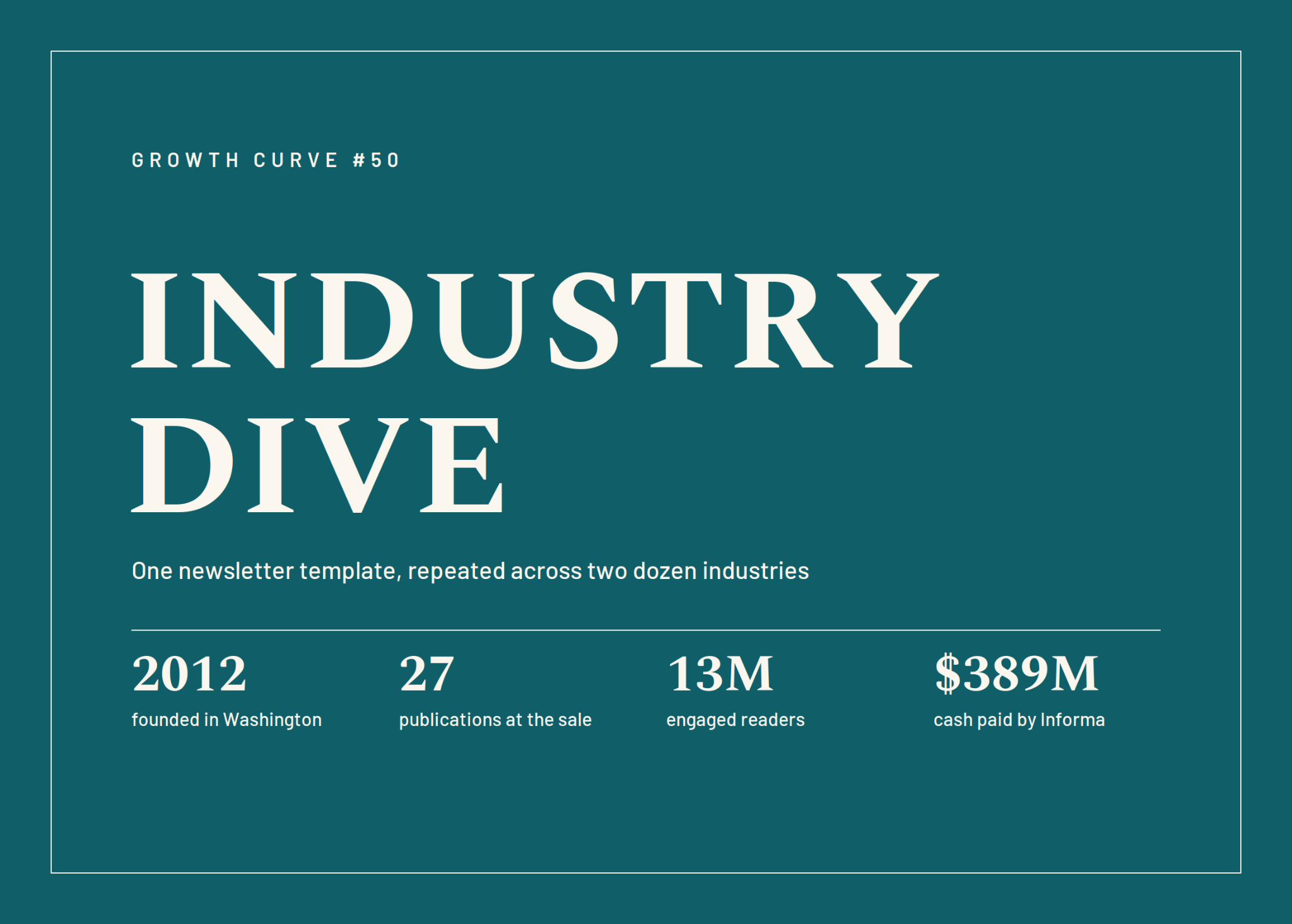
In 2012, three former colleagues from B2B publisher FierceMarkets started a media company in Washington, D.C. Sean Griffey had been president of FierceMarkets, where he oversaw the launch of more than 25 digital brands. At the new company, he became chief executive, with Eli Dickinson as chief technology officer and Ryan Willumson as chief revenue officer. They called the business Industry Dive, worked from a former convenience store furnished with leftover IKEA desks, and started with less than $1 million in early angel and seed funding.
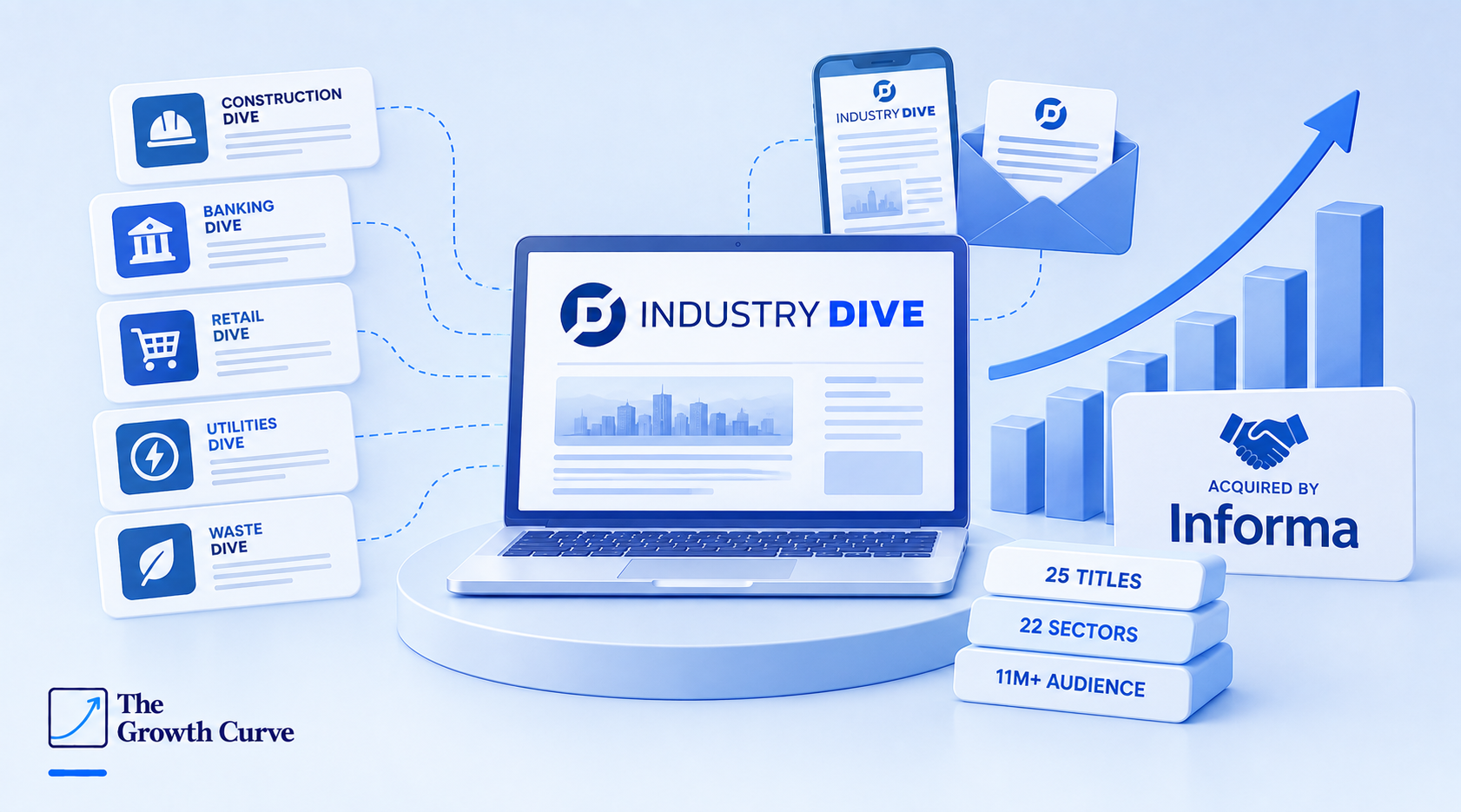
From the beginning, the idea was broader than a single publication. On launch day, Industry Dive released five newsletters covering construction, education, marketing, utilities, and waste. Ten years later, Informa agreed to acquire the company in a transaction valued at up to $525 million.
One Model, Many Markets
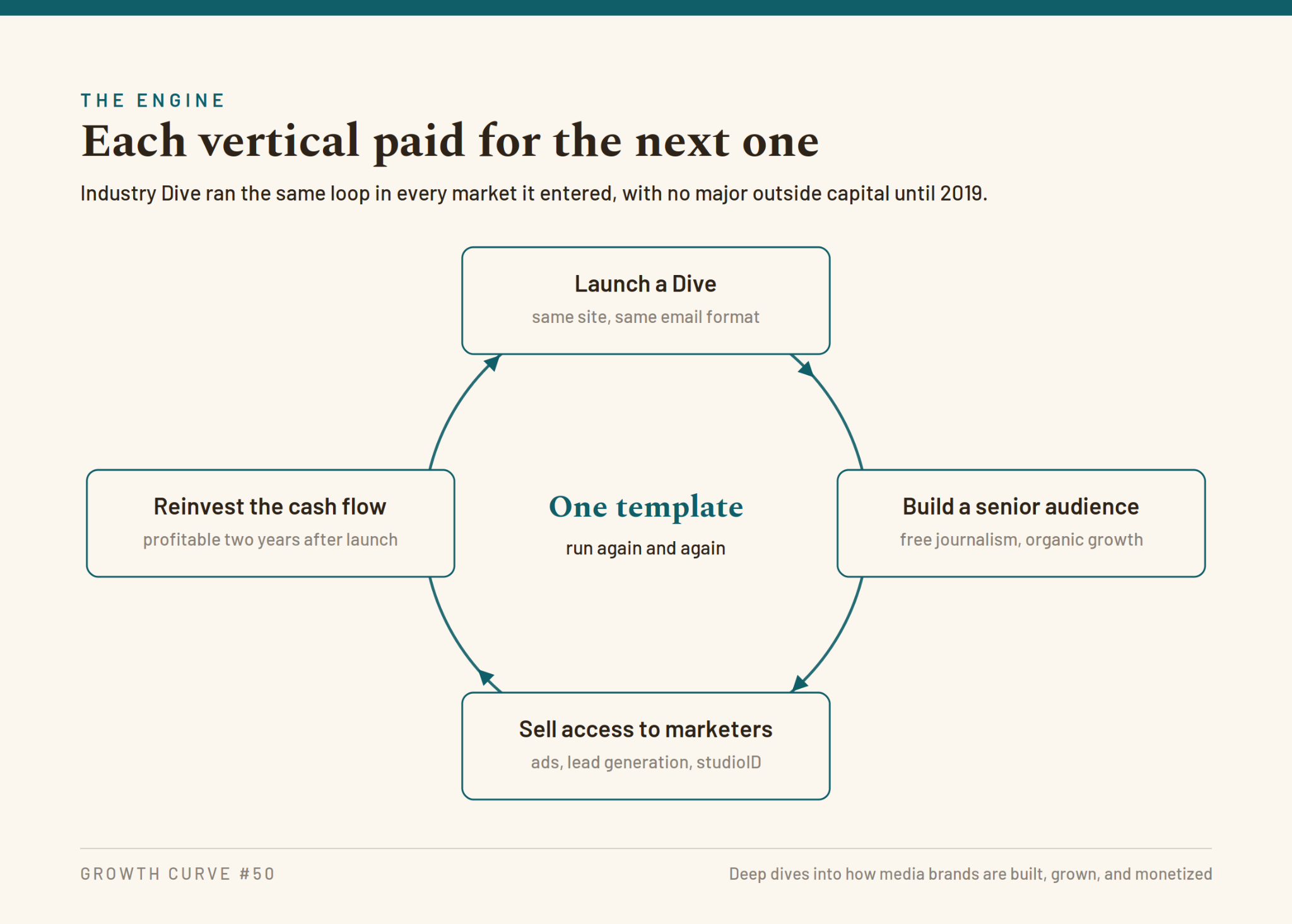
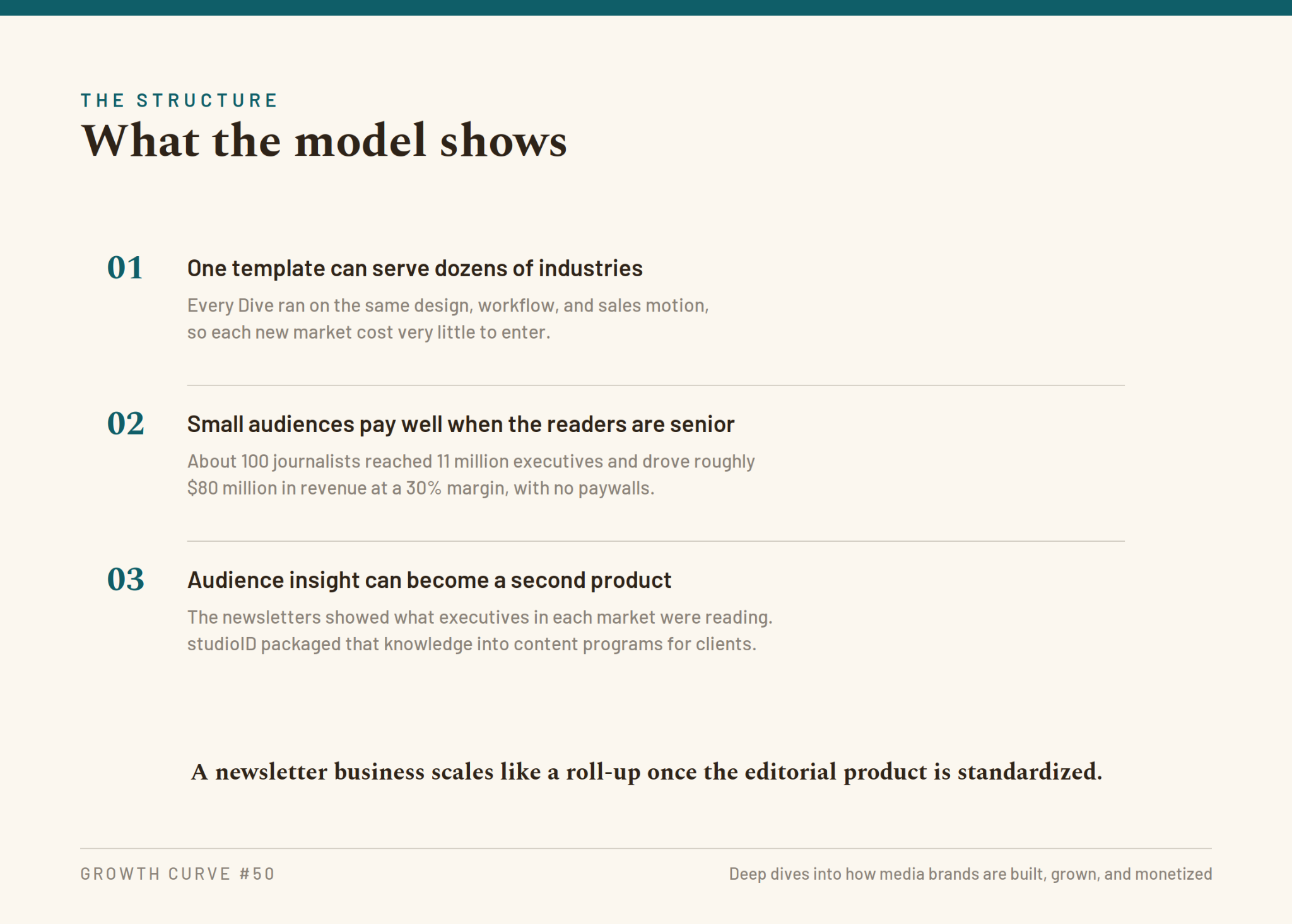
Most newsletter businesses begin with a single title and expand only after that title has found an audience. Industry Dive took a different approach. The founders launched five publications together. Each vertical had a mobile-friendly website, a concise email newsletter, and a standardized editorial workflow. The operation was small in the beginning. The three founders worked with a handful of freelancers, writing newsletters in the mornings before turning their attention to product, sales, and the rest of the business.
The newsletters were kept deliberately short because many readers were checking them on their phones during brief gaps in the workday. The email provided the summary, while the website had the deeper reporting for readers who wanted more. Design also mattered. Griffey believed that much of B2B publishing was difficult to navigate and poorly adapted for mobile devices, giving a new publication room to differentiate itself with a simpler reading experience. Industry Dive spent only about $500 to $1,000 a month on advertising in its early years. Much of the growth was organic, and Griffey personally responded to readers' emails as the audience grew.
The business became profitable roughly two years after launch. From there, new titles could be financed from operating cash flow. Each new vertical followed the same basic process, using the same technology, editorial structure, audience-development approach, and commercial model. By late 2021, Industry Dive operated 25 titles across 22 sectors, including Retail Dive, Banking Dive, and Waste Dive.
Monetizing a Free Publication
Industry Dive also made an early decision to keep its journalism free. As more B2B publishers introduced paid subscriptions during the 2010s, Griffey argued that an advertising-supported model could still work when the audience itself was valuable enough.
Industry Dive's publications were built around narrow professional groups, often consisting of senior managers and decision-makers who were difficult for marketers to reach through broader media channels. A newsletter read by utility executives, healthcare leaders, retailers, or finance professionals could therefore be commercially valuable even without a very large audience.
Industry Dive monetized those readers through advertising, sponsored content, lead generation, and related marketing products. The standardized structure helped on the commercial side as well. Similar formats and ad products could be sold across multiple publications, while the same technology supported each vertical. Launching another Dive therefore created additional audience and advertising inventory without requiring an entirely new commercial infrastructure.
By 2021, Industry Dive employed roughly 100 journalists and reported an audience of more than 11 million executives. Griffey expected revenue to reach around $80 million that year, more than twice the level recorded in 2019, with a profit margin of roughly 30%.
Private Equity Capital and a Content Studio
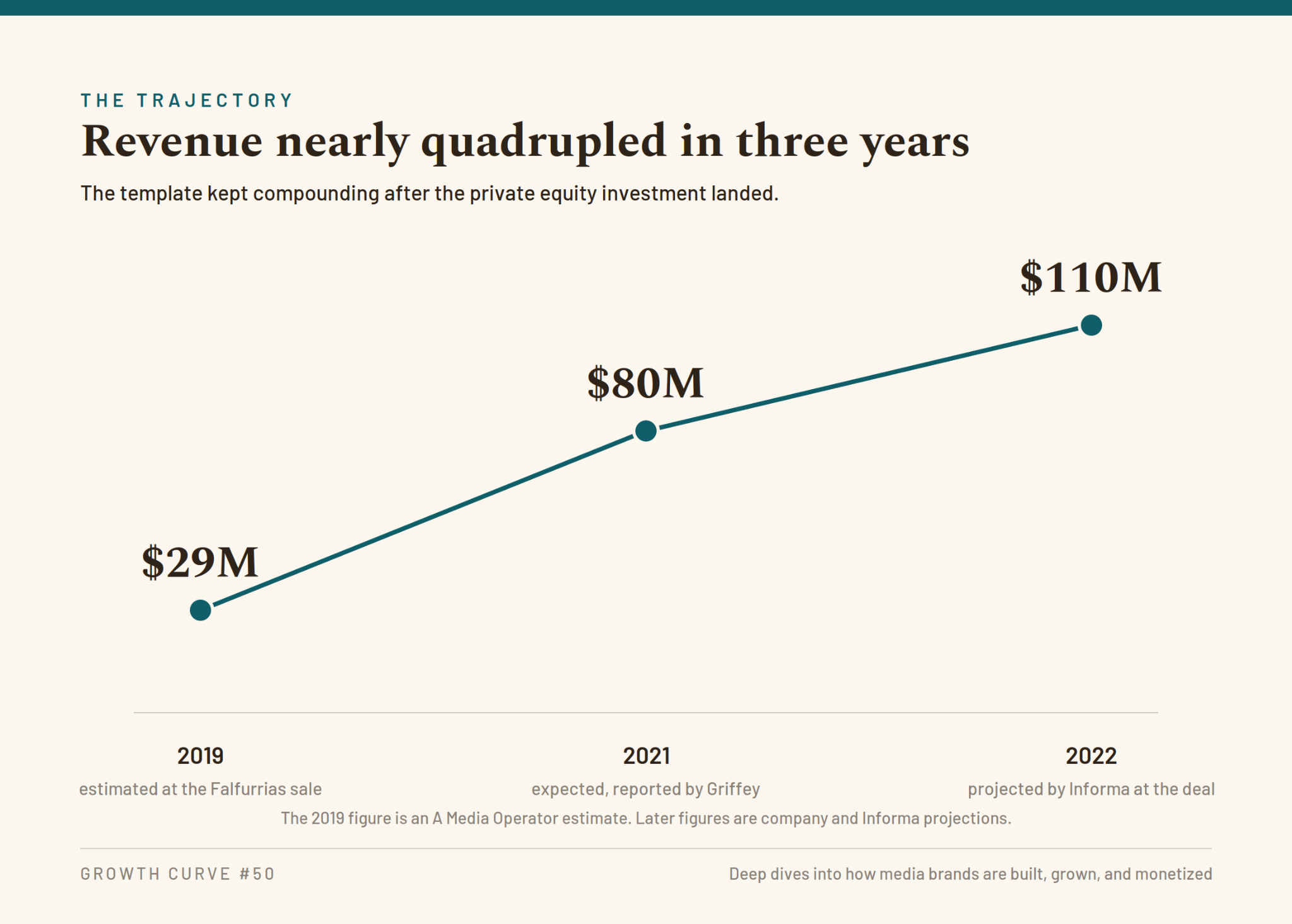
Industry Dive operated for several years without major outside investment after its early angel funding. That changed in September 2019, when Falfurrias Capital Partners acquired a majority stake in the business. The transaction terms were not disclosed, although Flashes & Flames reported that the deal was believed to value Industry Dive at roughly $70 million, or around 10 times EBITDA. A Media Operator estimated revenue at approximately $29 million at the time.
In July 2020, Industry Dive acquired NewsCred's content marketing studio and services business. The transaction included the people, clients, and services operations, while NewsCred retained its software products. Industry Dive combined the acquired business with its existing Brand Studio and relaunched the group as studioID. Around 40 former NewsCred employees joined the company under Jane Qin Medeiros.
The publications provided a steady view of what executives in different industries were reading, which topics were attracting attention, and how companies were trying to reach those audiences. studioID allowed Industry Dive to apply that knowledge to branded content, research, and broader marketing programs for clients.
The company also began adding established publications through acquisitions. It bought CFO.com in December 2020, followed by Mobile Payments Today, PharmaVOICE, and Ladders News during 2021. Flashes & Flames estimated that Industry Dive spent roughly $80-$90 million on acquisitions after the Falfurrias investment.
Inside the Informa Acquisition
In July 2022, Informa announced an agreement to acquire Industry Dive. The transaction included $389 million in initial cash consideration, with an additional earn-out tied to future growth that could have increased the total value to $525 million by 2024. Informa projected that Industry Dive would generate approximately $110 million in revenue and about $34 million in EBITDA that year. On that basis, the initial $389 million payment represented roughly 11.4 times expected EBITDA before synergies.
At the time of the acquisition announcement, Industry Dive operated 27 Dives across 24 specialist B2B markets and published more than 70 daily and weekly newsletters. It had more than 2.5 million active subscribers, an engaged audience of roughly 13 million, and about 380 employees, including approximately 115 editorial staff.
Industry Dive joined Informa Tech as an independent brand under its existing management team. At the time, BuzzFeed's market value was only slightly more than half of Industry Dive's enterprise value, despite BuzzFeed having raised hundreds of millions of dollars in venture funding.
Industry Dive had started with relatively little outside capital and focused on specialist B2B markets such as utilities, waste, construction, banking, and retail. It expanded by applying the same publishing model across more industries, then layering additional advertising, content, and marketing products onto the audiences it had built.
A Trade Magazine Model Rebuilt for the Inbox
Informa chief executive Stephen Carter described Industry Dive as a company that had adapted the traditional B2B publishing model for specialist markets in the digital age. Trade magazines had long built businesses around owning concentrated professional audiences and selling marketers access to them. Industry Dive applied the same basic logic to email newsletters, mobile websites, digital advertising, and a shared publishing infrastructure.
Individual publications could cover very different sectors, but much of the underlying machinery remained consistent. Editorial formats were similar. Technology was shared. Products could be advertised across the portfolio. The Dive naming system created a recognizable family of publications while individual editorial teams developed expertise in their own industries.
Industry Dive is a reminder that scale does not always come from chasing the largest possible audience. It can also come from building a strong publication in narrow professional markets where readers are valuable, and advertisers have few efficient ways to reach them.
That was the opportunity Industry Dive pursued across sectors such as waste, utilities, construction, banking, and retail. By the time Informa acquired the company in 2022, those specialist audiences had grown into a business generating more than $100 million in annual revenue.
*** Every week, we pick apart how the world's best media brands got to where they are. This post is the long read. Growth Curve, our weekly newsletter, is the sharp version: same insight, shorter format, straight to your inbox. Subscribe free here. ***
Your newsletter won't build itself.